

Stop being the bottleneck in your B2B sales. Learn the five levels of leadership to move from founder-led sales to a predictable revenue engine.
The leadership gap in founder-led sales
Most B2B founders get stuck at the third level of leadership because they are too good at selling. They mistake their ability to close a deal for the ability to lead a sales team. This creates a dangerous dependency where the company’s revenue relies on the founder’s personal charisma rather than a predictable revenue engine.

The five levels of leadership provide a diagnostic map to move from being the sole rainmaker to building a scalable B2B sales engine. When a founder cannot move past the level of production, the business hits a growth ceiling. The goal is to shift from doing the work to building the people who do the work.
Level one: Position
Position is the lowest level of leadership. People follow you because they have to. In a startup, this is the founder by default. Your title grants you authority, but it does not grant you influence. This is a fragile state of leadership.
In our work at Sales Fundas, we often see founders rely on their title to push targets. They tell a rep to hit a number because the founder owns the company. This approach creates compliance, not commitment. A rep who follows only because of position will quit the moment a better offer appears or the first few deals fall through.
The failure mode here is treating the sales team like a fulfillment center. If your team only moves when you give a direct order, you are leading from position. You are not leading; you are managing a hierarchy.
Level two: Permission
Permission is based on relationships. People follow you because they want to. You stop relying on the org chart and start building trust. This is where a leader begins to understand the motivations of their team.
For a B2B sales leader, this means moving beyond the quota. You start asking why a rep is struggling with a specific Ideal Customer Profile (ICP). You show interest in their professional growth. Trust is the currency of this level.
But there is a trap. Many founders stay here too long because they want to be liked. They avoid the hard conversations about pipeline hygiene or poor discovery calls. Liking your boss is not a strategy for revenue growth. If relationships replace accountability, the pipeline will stagnate.
Level three: Production
Production is where results happen. People follow you because of what you have done for the organization. This is the most common level for B2B founders. You are the top closer. You bring in the biggest accounts. You know the product better than anyone.
The power of this level is credibility. Your team respects you because you can do the job. You can jump on a call and save a deal. This is a strong foundation, but it is also a ceiling.
The problem is the “super-rep” syndrome. When a leader identifies as a producer, they often struggle to delegate. They see a rep struggling and simply take over the call. By doing this, they rob the rep of the learning experience and maintain the founder-dependency. To scale, you must stop being the best salesperson in the room.
To move beyond this, you must transition from closing deals to building a B2B pipeline architecture that works without your intervention.
Level four: People development
Level four is the shift from production to reproduction. People follow you because of what you have done for them. You stop focusing on your own quota and start focusing on the reps’ ability to hit theirs.
In practice, this looks like shifting your calendar. Instead of spending eight hours a day on sales calls, you spend four hours on coaching. You stop giving the answers and start asking the right questions. You help your team define their ICP in sales so they can find their own leads.
This is where a Fractional CSO becomes valuable. An embedded leader helps the founder stop the instinct to “save” every deal. They implement a repeatable process. The focus moves to skill acquisition. When your reps become top producers, the business is no longer dependent on one person.
The result is a shift in unit economics. According to an internal analysis of B2B SMEs in India, companies that prioritize sales coaching over founder-led closing see a 30% faster ramp-up time for new hires.
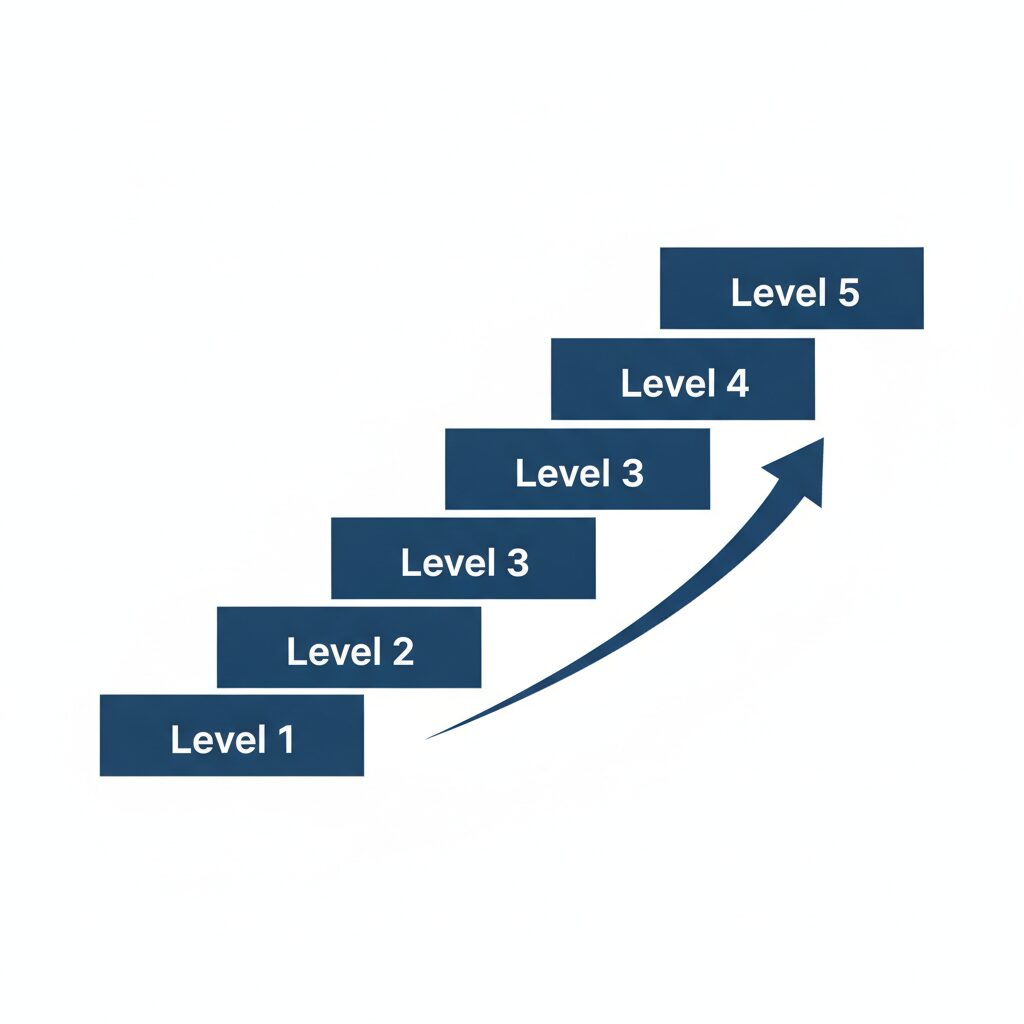
Level five: Pinnacle
The pinnacle is about legacy and reputation. People follow you because of who you are and what you represent. At this level, you are not just leading a team; you are shaping the industry or the organization’s long-term trajectory.
For a B2B founder, this means the sales engine is fully autonomous. You have built a culture of high performance. The system is so stable that your primary role is strategic direction, not tactical oversight. You are no longer worried about the weekly forecast because the pipeline architecture is predictable.
This is the stage of revenue transformation. You have moved from a founder who sells to a CEO who leads a selling organization. The company can now enter new markets or scale its headcount without the revenue dipping because the leadership system is embedded in the process.
Diagnosing your current level
Most founders believe they are at level four, but they are actually at level three. The test is simple: if you took a thirty-day vacation without your phone, would your revenue grow, stay flat, or collapse?
If the revenue collapses, you are a producer (Level 3). You have created a system that requires your presence to function. This is a liability. If the revenue stays flat, you have some process, but no growth engine. If the revenue grows, you have successfully developed your people (Level 4) and the system (Level 5).
The move from level three to four is the hardest transition in a B2B startup. It requires a psychological shift. You have to be okay with a rep closing a deal slightly worse than you would have, as long as they closed it themselves. Perfection is the enemy of scale.
The strategic shift to scalable growth
Scaling a sales team is not about hiring more people. It is about increasing the leadership level of the person at the top. If you hire ten reps under a Level 3 leader, you just have ten people waiting for the founder to tell them what to do.
To break this cycle, focus on these three actions:
First, document the winning sequence. Turn your intuition into a playbook. If you know how to handle an objection, write it down. This moves the knowledge from your head into the company’s assets.
Second, implement a coaching cadence. Spend time analyzing recorded calls. Identify the specific gap in the rep’s discovery process. Focus on the strategic diagnosis factor rather than the outcome of the call.
Third, decouple your identity from the revenue. Your value is no longer your ability to close a ₹10 Lakh deal. Your value is your ability to build a team that closes ten such deals a month. This is the essence of predictable sales practice.
Frequently Asked Questions
Can a leader be at different levels with different employees?
Yes. You might lead a senior rep through production and a junior rep through position. Leadership is contextual to the relationship.
How long does it take to move from level one to level two?
This depends on the trust built. In high-growth B2B environments, this usually takes three to six months of consistent interaction.
Why do most founders get stuck at level three?
The immediate reward of closing a deal is higher than the long-term reward of coaching. Founders prefer the quick win of a signed contract.
Is it possible to skip levels?
No. You cannot develop people if you have no relationship with them, and you cannot build trust if you have no credibility through production.
How does this framework apply to remote sales teams?
Remote leadership requires more intentionality in level two. You must replace water-cooler talk with structured one-on-ones to build permission.
What is the main sign that I am at level four?
You feel a sense of pride when a rep closes a complex deal using a technique you taught them, without your help.
Does a Fractional CSO help in moving levels?
Yes. They provide the external accountability needed to stop the founder from interfering in every deal.
What happens if I stay at level one too long?
You will experience high churn. Top talent will not stay in an environment where they are managed by title alone.
Scale your revenue without becoming a bottleneck
Stop being the only person who can close your biggest deals. Build a scalable B2B sales engine that produces predictable revenue regardless of who is on the call. Book a Fractional CSO consultation to audit your leadership gaps today for free.