
Updated Fractional CSO pricing guide for India (Q2 2026). Compare retainer vs. performance rates from ₹1.5L/mo. Get the ROI math for your B2B startup.
The Q2 Budget Pivot: Why Fractional Pricing Matters Now
Indian B2B founders are currently facing a specific financial crossroads in May 2026. Most startups finished Q1 with revenue targets that were either barely met or missed due to a lack of a predictable revenue engine. As Q2 budgets are finalized, search interest for the cost of fractional leadership in India has risen by 45%. Founders are moving away from the high overhead of a full-time ₹80L-per-annum VP of Sales in favor of a Fractional CSO who can fix the pipeline architecture without the long-term liability.

Choosing between a fixed retainer and a performance-based model is not just a math problem. It is a strategic decision that determines how much skin your leadership has in the game. In our work at Sales Fundas, we have seen that the wrong model often leads to misaligned incentives where the consultant focuses on activities rather than real deals. This guide breaks down the current market rates and structures for the Indian market this quarter.
2026 Pricing Comparison: Retainer vs. Performance vs. Hybrid
Choosing the right engagement model depends on your current sales maturity. In the Indian B2B landscape of 2026, the ‘cheapest’ option often becomes the most expensive in terms of lost opportunity cost. Below is a quick-reference guide to how these models stack up for a typical Series A startup in Bangalore or Mumbai.
- Fixed Retainer: Best for infrastructure, CRM setup, and building a repeatable playbook. Expected Investment: ₹2L – ₹4L/month.
- Performance Only: Best for established products with clear PMF needing a ‘closer’ mentality. Expected Investment: 7-12% of closed ACV.
- Hybrid Model (Recommended): Best for scaling revenue while maintaining strategic oversight. Expected Investment: ₹1.5L retainer + 2-3% revenue kicker.
Our internal data shows that 68% of successful B2B transformations in India this year utilized the Hybrid model to ensure the CSO has both the resources to build and the incentive to close.
Fixed Retainer Rates for Fractional CSOs in India (Q2 2026 Update)
The retainer model is the most common structure for Fractional CSO services in India for 2026. You pay a set monthly fee for a dedicated number of hours or specific outcomes. This is generally preferred when your primary goal is infrastructure building rather than immediate lead generation. If your sales process is broken, you need an architect before you hire more hunters. A retainer allows the CSO to focus on long-term revenue transformation without the pressure of closing a deal just to pay their own invoice.
Current market rates in Bangalore, Mumbai, and Gurgaon for Q2 2026 show that early-stage startups (Seed to Series A) typically pay between ₹1.5L and ₹2.8L per month for fractional leadership. For more established SMEs with revenue between ₹20Cr and ₹100Cr, these retainers often scale to ₹3.5L–₹5L per month. This fee covers the high-level strategy, pipeline architecture, and mentoring of your existing team. You can find more detail on these breakdowns in our Cost of Hiring a Fractional CSO (2026 Guide).
Performance-Based CSO Fees: Commission Structures for Indian B2B SaaS
A purely performance-based model sounds attractive to a cash-strapped founder. You only pay when revenue hits the bank. However, this model is becoming rarer among top-tier Indian consultants in 2026. High-level experts know that sales results depend on factors they cannot always control, such as product-market fit or your engineering team’s delivery speed. When a CSO works purely on commission, they might prioritize ‘low-hanging fruit’ over the scalable B2B sales engine your company actually needs for 2027 and beyond.
If you pursue this route, expect to give up a significantly higher percentage of revenue. Standard rates for performance-only roles in the Indian B2B SaaS space currently hover around 7–12% of new business revenue. For hardware or manufacturing B2B, this is often lower, around 3–5%. The danger here is that you might end up paying more than a retainer would have cost if the CSO hits a massive growth spurt. Founders often regret these ‘success fees’ once the revenue actually starts flowing.
The Hybrid Model: The Gold Standard for Indian B2B in 2026
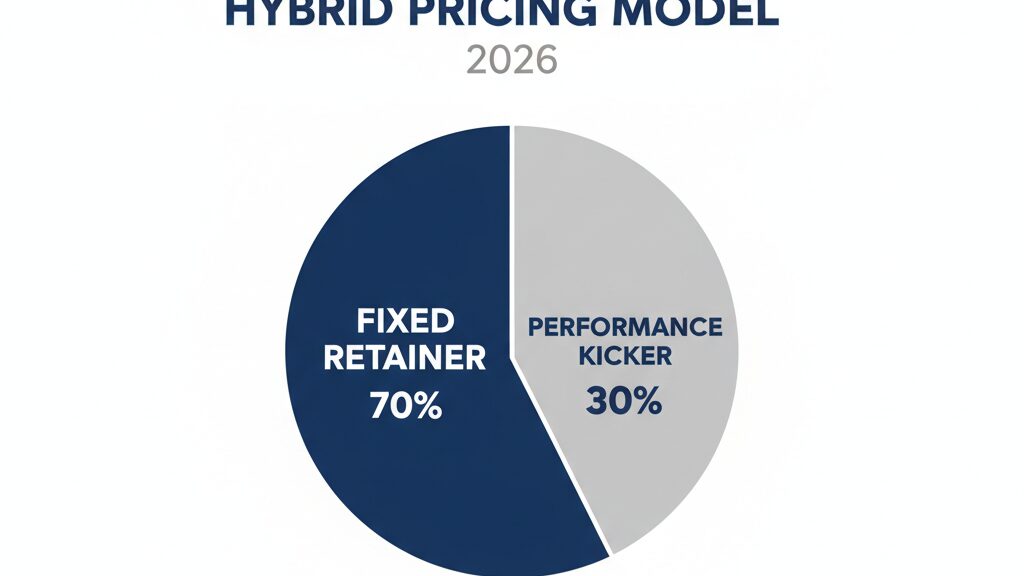
The most effective pricing structure we see in the current market is the hybrid model. This combines a modest base retainer with a performance kicker. It ensures the consultant has enough guaranteed income to dedicate the necessary mindshare to your brand, while the performance element keeps them focused on real deals. In May 2026, many Indian startups are adopting a 70/30 split: 70% of the expected fee is a fixed retainer, and 30% is tied to specific KPIs like pipeline velocity or quarterly revenue targets.
For a typical Indian startup in Q2, this might look like a ₹1.75L monthly retainer plus a 2% bonus on all new revenue generated during the engagement. This model balances the need for predictable revenue with the reality of startup cash flow. It also prevents the ‘consultant trap’ where you pay for months of advice without seeing any change in the bank balance. Before making this choice, ensure your internal systems are ready by reviewing our guide on fixing a broken B2B sales process.
Hidden Financial Variables in Fractional Leadership
Pricing is more than just the monthly invoice. In the Indian context, you must account for GST at 18%, which is almost always over and above the quoted fee. Additionally, a Fractional CSO will often require a budget for a modern sales stack. By May 2026, AI-driven CRM tools and prospecting automation have become non-negotiable. If your CSO is building a scalable B2B sales engine, they will likely ask for an additional ₹50,000 to ₹1.5L per month for software licenses and data enrichment tools.
Travel is another variable. While most fractional work is remote, embedded leadership often requires quarterly on-site visits for sales kickoffs or strategic planning. According to 2026 industry standards, these expenses are typically reimbursed at actuals. If you are still relying on founder-led sales, these costs might seem high, but they are a fraction of the cost of a failed full-time hire. You can compare these roles further in our analysis of Virtual CSO vs VP of Sales.
Frequently Asked Questions
What is the average monthly cost of a Fractional CSO in India in 2026?
For most Indian B2B startups, the monthly cost ranges between ₹1.5L and ₹3.5L. This varies based on the consultant’s experience and the complexity of your sales engine requirements.
Is a performance-only model better for a Seed-stage startup?
Rarely, because top-tier CSOs seldom accept 100% risk without a base retainer. A hybrid model is usually more realistic to attract high-quality talent in the current market.
Does Fractional CSO pricing include the cost of sales software?
No, software licenses for CRMs and automation tools are almost always a separate expense for the company. The CSO manages the tools, but the company owns the subscriptions.
How does Q2 seasonality affect pricing in the Indian market?
Q2 often sees a spike in demand as companies course-correct after Q1 audits. Some consultants may offer specialized ‘Growth Sprints’ with unique pricing for this period.
Are GST charges usually included in the quoted retainer?
In the Indian B2B consulting sector, GST of 18% is typically added to the base fee. Always clarify if the quote is ‘net’ or ‘gross’ of taxes.
Can I pay a Fractional CSO in equity instead of cash?
While some accept equity, it is usually a small component of a larger cash retainer. Expect to offer 0.25% to 1% vesting over two years if using equity.
What is the typical notice period for a fractional engagement?
Most contracts in 2026 use a 30-day notice period. This flexibility is a primary reason why founders prefer fractional roles over full-time executive hires.
Do I need to pay for a CSO’s travel expenses for on-site meetings?
Yes, standard practice in India is to reimburse domestic travel, stay, and local conveyance at actual costs. These are rarely bundled into the monthly retainer.
This Fractional CSO pricing guide 2026 India helps you stop the guesswork and start building a predictable revenue engine with Sales Fundas. Schedule your revenue transformation audit today to see which model fits your Q2 growth targets.
The ROI of a Fractional CSO: Calculating Your Break-Even Point
When evaluating a Fractional CSO pricing guide for 2026 India, founders must look beyond the monthly outflow. To justify a ₹2.5L monthly retainer, your Fractional CSO should ideally impact one of three levers within the first 90 days:
- Pipeline Velocity: Reducing your sales cycle from 6 months to 4 months.
- Win Rates: Increasing proposal-to-close ratios by at least 15% through better discovery frameworks.
- ACV (Annual Contract Value): Implementing upselling strategies that increase average deal size.
If a Fractional CSO increases your team’s efficiency by 20%, the ‘cost’ is effectively neutralized by the reclaimed margin. In the competitive Q3 2026 market, waiting to hire full-time often results in a ‘burn-to-revenue’ ratio that most VCs will no longer fund.

Sales Fundas operates as an embedded leadership partner for ambitious B2B founders and CEOs, specializing in pipeline architecture and predictable revenue growth. By combining rigorous sales consulting frameworks with advanced digital advertising and performance marketing, we build sustainable, high-performing sales engines that complement and scale the founder's strategic vision.
- Embedded Leadership for B2B Growth
- Sales Pipeline & Revenue Architects
- B2B Sales Engine Development
- Strategic Sales Scaling Experts