
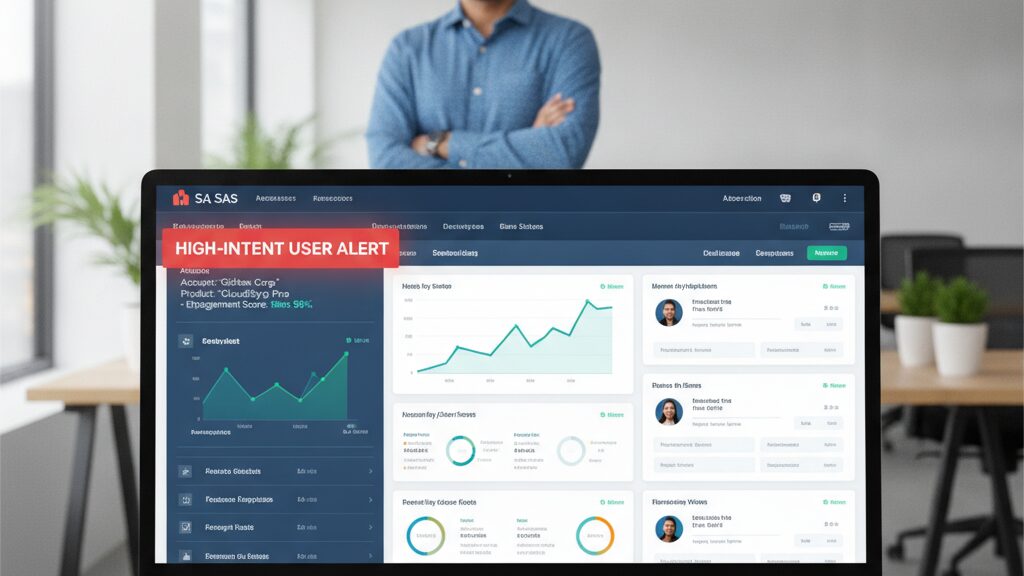
Stop the PLG vs SLG debate. Learn how to implement a Product-Led Sales (PLS) framework for Indian B2B SaaS to reduce CAC and increase win rates in 2026.
The death of the PLG vs SLG debate
The argument between Product-Led Growth (PLG) and Sales-Led Growth (SLG) is a distraction. In 2026, the most efficient B2B SaaS companies in India have stopped choosing sides. They have moved to a hybrid motion: Product-Led Sales (PLS). This approach eliminates cold prospecting by using actual product usage data to trigger sales interventions only when a user demonstrates high intent.

For B2B founders, the goal is no longer just about getting users into a free trial. It is about reducing Customer Acquisition Cost (CAC) by knowing exactly when a user is ready to pay for an enterprise contract. When your sales team stops guessing and starts responding to data, you build a predictable revenue engine that does not rely on founder-led heroism.
Defining the Product-Led Sales motion
Product-Led Sales is a strategy where the product acts as the primary lead generation tool. Unlike pure PLG, where the user self-serves through the entire lifecycle, PLS introduces a human sales rep at a precise moment of value realization. The rep does not enter the conversation to “pitch” the software; they enter to help the user expand their usage or solve an enterprise-level organizational problem.
In practice, this means your sales team ignores the thousands of casual users and focuses exclusively on Product-Qualified Leads (PQLs). A PQL is a user who has hit a specific milestone within your app that correlates strongly with a conversion to a paid plan. According to data from the 2026 SaaS Efficiency Report, companies using PQL triggers see a 34% higher win rate compared to those relying on traditional MQLs (Marketing Qualified Leads).
Identifying high-intent usage signals
The success of this framework depends on your pipeline architecture. You cannot rely on a simple “signed up” trigger. You need behavioral markers that indicate a user is experiencing the “Aha! moment” and is now facing a bottleneck that only a paid tier or an enterprise plan can solve.
Consider these three types of signals:
Usage Velocity: A user who performs a core action ten times in the first 48 hours is a higher priority than one who logs in once a week. If a user’s activity spikes by 300% in a seven-day window, it signals a shift from exploration to integration.
Feature Collision: This occurs when a user repeatedly attempts to use a feature locked behind a paywall. In one Indian fintech SaaS case, tracking “failed clicks” on the automated tax reconciliation module led to a 22% increase in conversion rates because sales reps reached out exactly when the user felt the pain of the limitation.
Organizational Density: When five different users from the same domain (e.g., @tata.com) join a free workspace within a month, you no longer have a user; you have an account. This is a massive signal for a Fractional CSO to step in and negotiate a site-wide license rather than individual seats.
Shifting the sales rep role from prospector to consultant
The failure mode in most Indian B2B startups is hiring “hunters” who treat PQLs like cold leads. If a rep calls a high-intent user and asks, “Would you like a demo?” they destroy the product-led experience. The user is already using the product; they do not need a demo of what they are already seeing.
The role must shift to a consultant. The outreach should be: “I noticed your team has processed 500 invoices this week and you are hitting the API limit. I can help you set up a dedicated instance to ensure your workflow does not break.” This is not selling; it is helping. It positions the rep as an expert who understands the user’s specific Ideal Customer Profile (ICP) and their current pain.
When you align the sales motion with product data, you stop the revenue leakage common in early-stage companies. You can read more about how to stop these gaps in our guide on 4 ICP Profitability Shifts That Stop Revenue Leakage.
The impact on B2B unit economics in India
For Indian founders, the pressure to maintain lean operations is high. Traditional SLG requires a heavy spend on SDRs (Sales Development Representatives) to book meetings. PLS flips this. Your product does the prospecting, and your reps do the closing.
This shift dramatically improves your B2B unit economics. By removing the top-of-funnel noise, you reduce the cost of lead acquisition. Instead of paying for expensive LinkedIn ads to find a needle in a haystack, you use the product to attract the haystack and the data to find the needle.
In a typical PLS model, the CAC is lowered because the sales cycle is shorter. The user is already convinced of the value. The conversation is no longer about “Why do I need this?” but “How do I scale this across my organization?”
Building the PLS pipeline architecture
Implementing this requires a tight loop between your product team and your sales team. If the data lives only in the product database and not the CRM, your reps will remain blind.
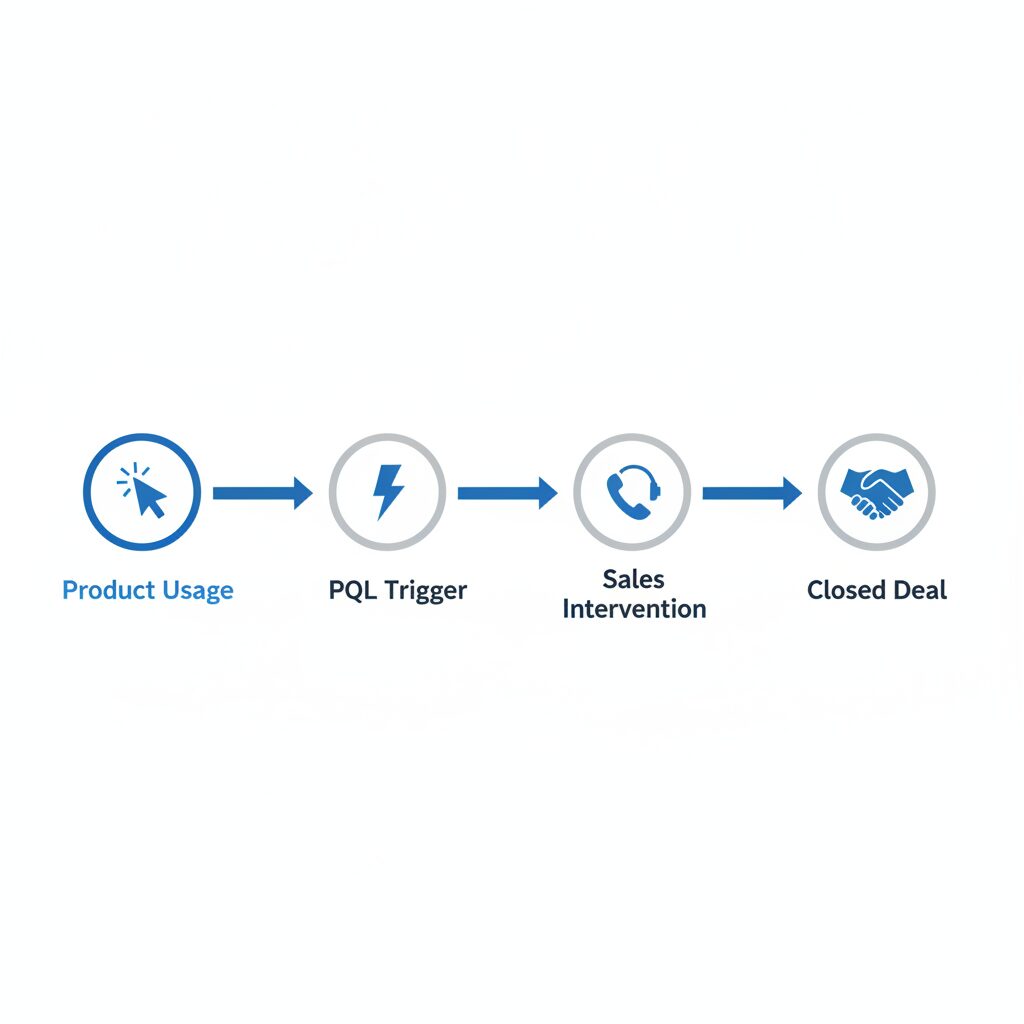
The architecture should follow this flow: Product Event $
ightarrow$ Scoring Engine $
ightarrow$ CRM Alert $
ightarrow$ Personalized Outreach. For example, if a user in a mid-sized Mumbai agency hits 80% of their storage limit, the system should automatically create a task in Zoho or HubSpot for the account manager to reach out with a specific expansion offer.
This level of coordination is what creates predictable revenue. It removes the randomness of “luck-based” sales. You can further optimize this by studying our approach to B2B Pipeline Architecture to ensure your lead flow is sustainable.
Common pitfalls in the hybrid motion
The most frequent mistake is the “over-reach.” This happens when a sales rep contacts a user too early, before the user has seen the value. If you intervene before the “Aha! moment,” you are just another annoying salesperson. You disrupt the user’s organic discovery process and increase churn.
Another error is ignoring the “unqualified’ product users. Not every high-usage user is a good customer. Some users are “power users” who will never pay. Your scoring system must combine usage data with firmographic data (company size, industry, revenue). A power user at a two-person freelance shop is a vanity metric; a moderate user at a 500-employee enterprise is a goldmine.
Execution roadmap for B2B Founders
To move to a PLS motion, start with a data audit. Identify the three actions that most of your paying customers took right before they upgraded. These are your North Star metrics for PQLs.
Next, create a “Signal-to-Action” map. Define exactly who gets notified when a signal is triggered and what the specific script for outreach is. Avoid generic templates. The outreach must reference the exact behavior the user exhibited in the app.
Finally, track your conversion rate from PQL to Closed-Won. If this rate is lower than your traditional sales leads, your triggers are likely too broad. Narrow the criteria until you are only alerting sales to users who are practically begging for an enterprise plan through their behavior.
Frequently Asked Questions
Is Product-Led Sales the same as PLG?
No. PLG focuses on the product driving the entire acquisition and expansion process. PLS uses the product to identify high-intent leads for a human sales rep to close.
How do I identify a PQL for my specific SaaS?
Analyze your existing paid customers and find the common behavioral patterns they exhibited before upgrading. Those patterns become your PQL triggers.
When should a sales rep first contact a PLG user?
Contact them only after they have reached a value milestone or hit a specific limitation that justifies a higher-tier plan.
Can a small team manage both PLG and PLS?
Yes, because PLS reduces the amount of manual prospecting required, allowing a small team to focus only on the highest-probability deals.
What CRM is best for a PLS motion in India?
Any CRM that integrates well with your product’s event tracking, such as HubSpot or Zoho, works well for managing PQL alerts.
Does PLS replace the need for an SDR?
It replaces the traditional “cold-calling” SDR role with a “product-specialist’ role focused on expansion and conversion.
Will this approach increase my churn rate?
Usually, it decreases churn because you are only selling to users who have already found value in the product.
How does PLS affect the average deal size?
It often increases deal size because reps can identify exactly which enterprise features the user needs based on their actual usage.
This Product-Led Sales (PLS) framework for Indian B2B SaaS is the most efficient way to stop wasting sales resources on low-intent leads. If your revenue is still too founder-dependent or your pipeline is unpredictable, you can build a scalable B2B sales engine with Sales Fundas. Book a strategy consultation for a Fractional CSO to architect your revenue transformation—no long-term commitment required.