

Stop losing B2B deals at the finish line. Learn how to treat closing as a diagnostic outcome for predictable revenue. Book your free consultation.
Closing is a result, not a tactic
Most B2B founders treat closing as a high-pressure event at the end of a sales cycle. They search for the right words to nudge a prospect into signing. This is a strategic error. Closing is not a separate act; it is the logical conclusion of a diagnostic process.

If a prospect hesitates at the end, the failure happened during discovery. You likely missed a critical pain point or failed to align the solution with the buyer’s Internal Rate of Return (IRR). When the value is quantified and the risk is mitigated, the close becomes a formality.
The diagnostic failure of traditional closing
Traditional sales training focuses on ‘closing techniques’ like the assumed close or the urgent close. These methods fail in high-ticket B2B sales because they address the symptom, not the cause. The cause of a stalled deal is almost always a lack of perceived value or an unidentified blocker.
In our work at Sales Fundas, we see founders struggle when their revenue depends on the founder’s personal charisma. This creates a brittle system. To build a scalable B2B sales engine, you must shift from ‘selling’ to ‘diagnosing’. If you identify the bottleneck in the client’s business, the solution is self-evident.
According to a 2026 Gartner study on B2B buying behavior, 74% of buyers prefer a representative who acts as a consultant rather than a vendor. This means the person who provides the best diagnosis wins the deal, regardless of their closing technique.
The Cost of Inaction (COI) framework
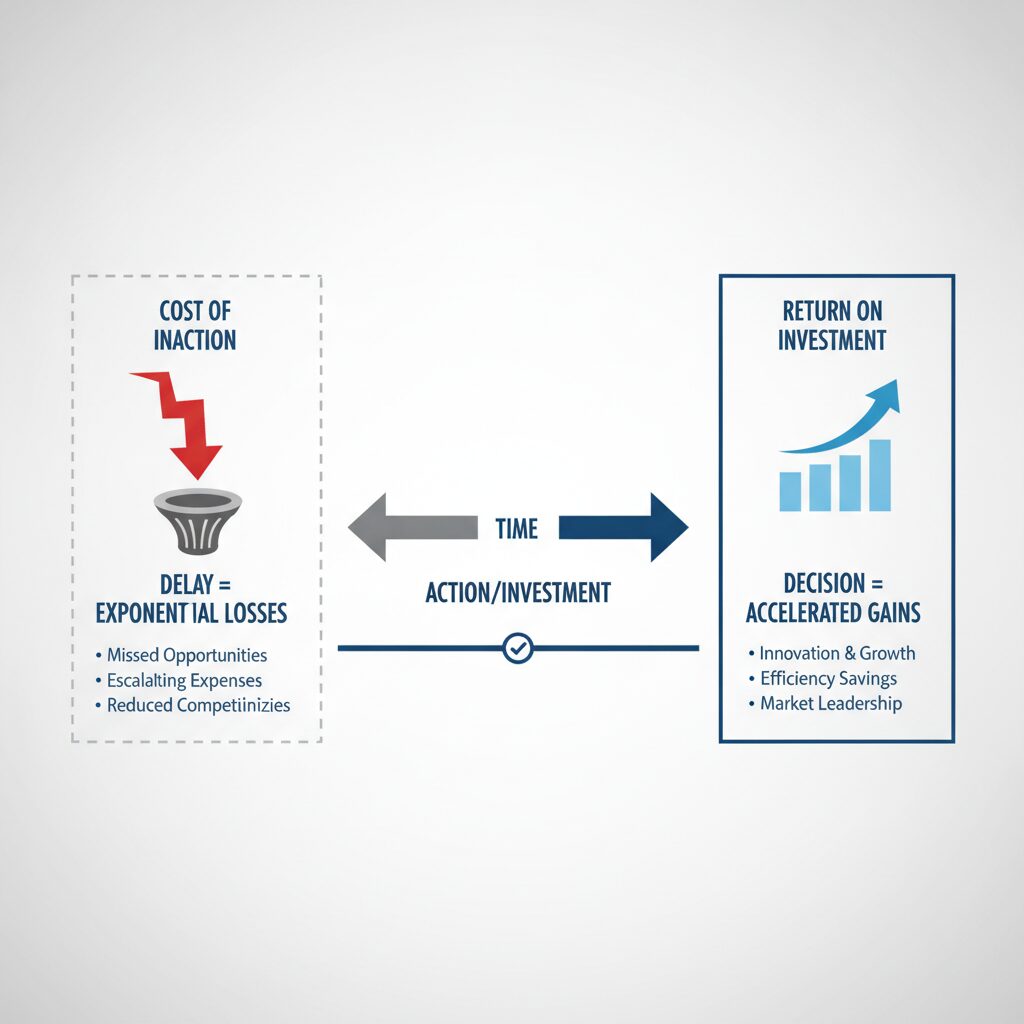
The most effective way to close a B2B deal is to quantify the cost of doing nothing. Most reps focus on the Return on Investment (ROI), which is a gain. Gains are optional. Losses are mandatory to avoid.
Shift the conversation to the Cost of Inaction (COI). Instead of saying ‘You will save ₹10 lakhs per year’, ask ‘What happens to your margins if this leak continues for another six months?’
For example, if a startup is losing ₹5 lakhs monthly due to a broken pipeline, the cost of waiting three months to decide is ₹15 lakhs. This creates a natural urgency. The prospect is no longer deciding whether to spend money; they are deciding how much more they are willing to lose. This approach aligns perfectly with a B2B pipeline architecture designed for predictable revenue.
Closing via the Next Step Agreement
Ambiguity is the enemy of the close. Many deals die in the ‘let me think about it’ phase because the salesperson failed to secure a concrete next step. A ‘follow-up call next week’ is not a next step; it is a placeholder.
Every interaction must end with a mutual agreement on the next action. In practice, this looks like a calendar invite sent and accepted before the current call ends. The agreement should be tied to a specific outcome, such as a technical review or a stakeholder sign-off.
The failure mode here is accepting vague commitments. When a CEO says, ‘Send me a proposal and I’ll get back to you,’ they are politely ending the conversation. A strategic response is: ‘Usually, when people ask for a proposal at this stage, it means they are either not convinced of the value or they have a hidden concern. Which one is it for you?’
Handling the ‘Internal Discussion’ blocker
In SME and startup sales, you rarely deal with a single decision-maker. You are fighting against consensus inertia. The person you are talking to might be sold, but they are afraid to champion the solution internally.
To solve this, stop trying to sell to the champion and start helping the champion sell to their board. Provide them with the exact data, the Ideal Customer Profile (ICP) alignment, and the risk mitigation slides they need.
If you are operating as a Fractional Sales Director, your goal is to institutionalize this process. You move the closing effort from the final call to the entire journey. By the time the final contract is sent, the internal consensus has already been built.
The logic of the ‘Reverse Close’
When a deal feels like it is slipping, the instinct is to push harder. This triggers loss aversion in the buyer and makes them retreat. The reverse close removes the pressure by questioning the fit.
Say: ‘Based on our last two calls, I’m not entirely sure if we are the right fit for your current stage. I don’t want you to invest ₹20 lakhs if the timing is off. Should we put this on hold for six months?’
This flips the dynamic. You are no longer the petitioner; you are the expert qualifying the lead. If the pain is real, the prospect will fight to keep the deal moving. If they agree to put it on hold, you have just saved yourself weeks of chasing a dead lead. This is how you maintain a profitable ICP.
Closing for long-term revenue transformation
A deal closed through manipulation is a deal that churns. B2B success depends on the gap between the promise made during the sale and the value delivered during onboarding.
The best closing technique is an honest assessment of whether you can actually solve the client’s problem. If the solution requires a change in their operations that they are unwilling to make, do not close the deal. The cost of a bad client is higher than the value of a missed target.
Focus on revenue transformation rather than just hitting a quota. This requires a disciplined approach to discovery and a refusal to use ‘tricks’. The logic is simple: the more accurately you diagnose the problem, the easier it is to close the sale.
Frequently Asked Questions
What is the best closing technique for B2B startups?
The most effective approach is the Cost of Inaction (COI) framework. Quantifying what the client loses by delaying the decision creates genuine urgency without using pressure tactics.
How do I handle the ‘it’s too expensive’ objection?
Shift the focus from price to value by comparing the cost of the solution to the cost of the problem. If the problem costs ₹50 lakhs a year, a ₹10 lakh solution is a bargain.
Should I use a hard close in B2B sales?
No, hard closes usually damage trust in high-ticket B2B environments. Use a diagnostic close where the solution is the only logical answer to the identified problem.
How do I stop prospects from ghosting after the proposal?
Never send a proposal without a scheduled meeting to review it together. A proposal sent into a vacuum is rarely read and often ignored.
What is the ‘assumptive close’ and does it work?
The assumptive close assumes the buyer has already said yes. While it can work in low-ticket sales, it often feels arrogant in B2B consulting and can stall complex deals.
How do I close a deal when there are multiple stakeholders?
Identify the economic buyer and the technical buyer early. Build a consensus by providing your champion with the data needed to sell the solution internally.
When is the right time to ask for the sale?
You ask for the sale the moment the prospect agrees that the cost of their current problem exceeds the cost of your solution. This often happens mid-discovery.
How do I handle ‘let me think about it’ without being pushy?
Ask for the specific piece of information they need to make a decision. If they cannot name it, they are likely not sold on the value or are not the decision-maker.
Start building your scalable B2B sales engine today with a free diagnostic consultation. No credit card required.
Sales Fundas operates as an embedded leadership partner for ambitious B2B founders and CEOs, specializing in pipeline architecture and predictable revenue growth. By combining rigorous sales consulting frameworks with advanced digital advertising and performance marketing, we build sustainable, high-performing sales engines that complement and scale the founder's strategic vision.
- B2B Sales Consulting & Pipeline Architecture Frameworks
- Advanced Performance Marketing & Conversion Rate Optimization
- Search & Generative Engine Optimization (SEO/GEO) Specialists
- B2B Digital Advertising & Lead Generation Experts
This content was drafted using AI-assisted research and meticulously reviewed by the Sales Fundas consulting team to ensure strategic accuracy and alignment with our B2B sales frameworks.