

A practical Q1 sales playbook for Indian B2B founders: budget allocation, pipeline velocity, BANT qualification, and breaking the founder-led sales trap.
Every April 1st, revenue targets for the new financial year stop being numbers on a spreadsheet and become active commitments. For a lot of Indian B2B founders, that shift from planning to execution is where things start to wobble. The budget exists. What’s usually missing is the sales engine to turn that budget into predictable growth.
Success in this opening quarter comes down to how fast you move from founder-led selling to a process your team can actually run without you in the room. Most companies get this wrong by chasing lead volume while ignoring how fast those leads actually move. Indian B2B buyers have gotten more skeptical of generic pitches too, so a strategy built on raw outreach numbers alone tends to stall out by the second month.

Setting Your Sales Budget for Maximum Q1 Output
Stop treating your sales budget as a cost centre. It’s fuel for the revenue function, and how you split it matters more than how much of it there is. Customer acquisition costs have been climbing across B2B software globally, with the median company now spending roughly two dollars to acquire every dollar of new recurring revenue, up around 14 percent from just a few years ago. Indian teams aren’t insulated from that trend. If you’re still allocating this year’s budget the way you allocated last year’s, you’re already behind it.
A common mistake is over-investing in lead generation tools while under-investing in the people who actually work those leads. If your team spends three hours a day untangling a messy database instead of talking to prospects, the budget is being wasted before it even reaches the field. Put real money, at least 20 percent of the quarter’s budget, into sales operations and CRM hygiene. You need a repeatable system where every rupee spent on marketing turns into a specific number of qualified discovery calls, not a vague sense that things are going well. If you’re still tracking deals manually, this guide to setting up a sales CRM is the place to stop the leakage.
Increasing Pipeline Velocity in the New Financial Year
Pipeline velocity is how fast a prospect moves from first contact to signed contract, and it has an actual formula behind it: qualified opportunities, multiplied by average deal size, multiplied by win rate, divided by the length of your sales cycle. Push any one of those four numbers in the right direction and revenue moves. Indian sales cycles already run long by global standards, and internal bureaucracy with multi-person buying committees stretches them further. Closing the distance between “hello” and “signed” is most of the job this quarter.
Start by auditing what’s actually sitting in your pipeline right now. A deal that has stayed in “Proposal Sent” for more than 21 days without a follow-up is very likely dead, even if it’s still in your forecast making the topline number look healthy. It’s easy to convince yourself you’re holding a five crore pipeline when a clear-eyed look shows barely a sixth of that is actually moving. Define strict exit criteria for every stage of the funnel. If a lead doesn’t meet them, move it into a nurture sequence and get it off the active board so you can see what’s real.
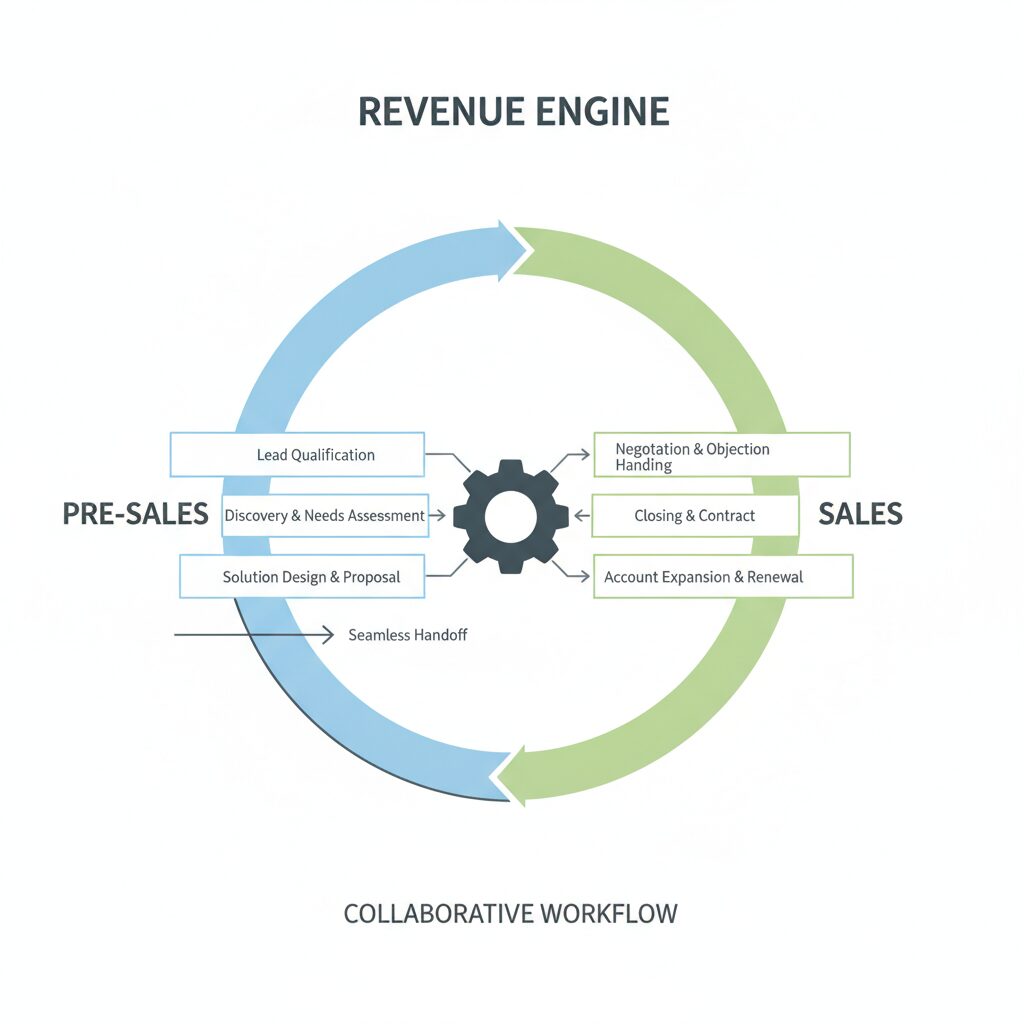
Breaking the Founder Trap in Q1
Plenty of CEOs running 10 to 50 person companies are still the primary closer on every meaningful deal. That’s the founder trap. It works fine at one crore in ARR. It becomes the ceiling once you’re aiming for ten. The job this quarter isn’t to hire five junior reps and hope talent compensates for the absence of a process. It’s to build a process they can actually follow without you in the room.
When you sell personally, you’re running on intuition built from hundreds of conversations your team hasn’t had yet. They can’t replicate that, however good they are, unless you give them something concrete to work from. If you’ve been wondering how to stop being the only salesperson in your company, start by writing down your best discovery questions. Give reps a framework, not a script to recite. Industry data on sales onboarding consistently shows a documented playbook cutting new-hire ramp time by 20 to 30 percent, which on its own is usually enough to justify the time it takes to write one down.
Focusing on Qualifying B2B Companies Early
Indian B2B sales run into a specific kind of politeness problem. A prospect takes three meetings because saying no outright feels rude, not because they have any real intention of buying. That alone can quietly kill a quarter. Qualifying aggressively in the first ten minutes of a conversation, not the third meeting, is what protects your pipeline from this.
Ask about budget and authority early, directly. Ask about need and timeline too, since together those four make up BANT, a qualification framework IBM built back in the 1950s that’s still the fastest way to sort a real opportunity from a polite one. If a prospect can’t put a number on what their current problem is costing them, they’re not going to pay to fix it. This shows up constantly in founder-led sales in India specifically, where a founder’s own belief in the product can make it hard to notice the person across the table was never actually a fit. Shift your attention toward companies that can already point to their own monthly progress against a goal. Those are the buyers who move at the pace you need.
Quarterly Milestones for Sales Accountability
Accountability isn’t a Monday morning meeting where numbers get read out loud. It’s milestones both sides agreed to upfront. Early in the financial year, the metrics worth watching are activity metrics that lead to revenue, not revenue itself. Revenue is a lagging indicator. Discovery calls, qualified demos, and proposals sent are leading indicators, and they tell you what next month looks like before next month arrives.
Set a weekly target for new pipeline generated. If it doesn’t grow in week two, you already have a good idea what week eight’s revenue looks like, and you still have time to do something about it. Tracking this closely enough to course-correct mid-quarter, rather than discovering the shortfall at quarter close, is what separates a recoverable quarter from a lost one. If your team is consistently missing these early indicators, it’s worth investigating why your sales team is failing and whether the problem is the person or the process underneath them.
Frequently Asked Questions
How should I allocate my B2B sales budget for the new financial year?
A reasonable starting split is 60 percent toward talent and training, 20 percent toward CRM and automation, and 20 percent toward targeted lead generation. Prioritise pipeline discipline over raw lead volume so the spend actually returns something.
What’s the fastest way to increase B2B pipeline velocity in India?
Define clear exit criteria for every stage of your funnel so zombie leads get removed quickly instead of inflating the forecast. Shortening the gap between the first discovery call and a proposal going out is usually the single biggest lever.
Why does founder-led sales become a problem on the way to ten crore ARR?
Founders sell on intuition and personal credibility, and junior reps can’t copy either one. Scaling past that point means replacing your personal involvement with a repeatable system and a clear, written set of deliverables for every call.
How do I tell if my pipeline is realistic or just optimistic?
A realistic pipeline has a clear next step and a confirmed timeline from the prospect on every deal. If more than half your CRM’s open deals show no next task, you’re looking at a wish list, not a forecast.
What sales metrics actually matter in the opening quarter?
Watch qualified discovery calls and the conversion rate from demo to proposal. Both predict the rest of the year’s revenue far more accurately than whatever has already closed.
Should I hire a VP of Sales or bring in a consultant first?
If your process isn’t documented and repeatable yet, a consultant is usually the better first move to build that sales engine. Hiring an expensive VP of Sales before the process exists tends to end in an expensive exit within six months.
How should I handle a prospect who goes quiet after a proposal?
Set the follow-up call during the proposal meeting itself, before they’ve had a chance to go quiet. If they still disappear, a short written note asking directly whether the project’s been deprioritised usually gets you a real yes or no instead of silence.
What’s AI’s actual role in B2B sales strategy right now?
It’s genuinely useful for administrative work and prospecting research, and not a substitute for human negotiation. Use it to tighten pipeline discipline behind the scenes, and keep the closing conversations high-touch.
Most of what’s above only works if someone actually builds it instead of just planning it, which is exactly where good intentions tend to stall out by month two. If your quarters have been inconsistent and you want a direct, accountable read on why, book a free sales audit call with Sales Fundas. You’ll get a written two to three page feedback note within 48 hours, no obligation and no pitch attached.
Sales Fundas operates as an embedded leadership partner for ambitious B2B founders and CEOs, specializing in pipeline architecture and predictable revenue growth. By combining rigorous sales consulting frameworks with advanced digital advertising and performance marketing, we build sustainable, high-performing sales engines that complement and scale the founder's strategic vision.
- Embedded Leadership for B2B Growth
- Sales Pipeline & Revenue Architects
- B2B Sales Engine Development
- Strategic Sales Scaling Experts