

Scale your Series A startup without the ₹1.6 Cr VP overhead. Use a Fractional Sales Director to build a scalable B2B sales engine in 2026. Start today.
The Series A Sales Paradox: Growth vs. Runway
A May 2026 Economic Times report reveals that 40% of Indian startups now choose fractional leadership over full-time hires to avoid the ₹1.6 Crore+ annual overhead of a veteran VP. For a Series A founder, the pressure is immense. Investors demand a predictable revenue engine, yet hiring a full-time sales leader often consumes the very runway meant for product development. This is why a Fractional Sales Director for Series A startups India has transitioned from an alternative to a primary growth strategy.

Most founders reach Series A through sheer grit and founder-led sales. But the tactics that got you to ₹5 Crore ARR will not get you to ₹50 Crore. The transition requires a move from ‘real deals’ closed by the CEO to a scalable B2B sales engine run by a professionalized team. In our work at Sales Fundas, we see founders struggling with the ‘Founder-Led Sales Trap’—where the CEO remains the only person capable of closing high-value contracts. This bottleneck kills valuation and stalls momentum.
Why Full-Time VPs Often Fail at Series A
Hiring a full-time VP of Sales in the current 2026 market is a high-risk gamble. A seasoned leader from a Tier-1 tech firm expects a massive base salary, ESOPs, and a significant marketing budget. Often, these leaders are ‘drivers,’ not ‘builders.’ They are used to managing established processes rather than creating a pipeline architecture from scratch. When a Series A startup hires them, the leader often spends six months ‘settling in’ while the burn rate accelerates.
The Fractional Sales Director vs Full-time VP debate is now settled by the numbers. A fractional leader enters the organization for 10–15 hours a week with a builder mindset. They do not need a three-month onboarding period. They focus on embedded leadership—fixing the broken parts of your Ideal Customer Profile (ICP) and implementing a repeatable process immediately. This preserves your Series A runway while professionalizing the sales function beyond the founder.
Building a Scalable B2B Sales Engine Without the Overhead
Professionalizing sales starts with the pipeline architecture. Most Indian startups rely on ‘no guesswork’ strategies in engineering but use ‘gut feel’ in sales. A fractional leader replaces this with data-driven revenue transformation. This involves auditing the current B2B sales process and identifying where leads drop off. In many 2026 SaaS and Fintech startups, the issue isn’t lead volume; it is a b2b sales process broken India-wide due to poor follow-up structures.
A Fractional Sales Director focuses on three core pillars: process, people, and tools. They define the CRM stages to reflect actual buyer behavior, not just internal milestones. They coach the existing junior team—who are often talented but undirected—to handle complex negotiations. This shift moves the company away from being founder-dependent. By the time you are ready for a full-time VP in 18 months, the ‘playbook’ is already written and tested with real deals.
The Economic Reality of Fractional Leadership in 2026
The cost of a top-tier sales leader in Bengaluru, Mumbai, or Gurgaon has spiked. Including benefits and bonuses, a full-time hire often exceeds ₹1.6 Crore. A fractional engagement typically costs 25–40% of that figure. According to the Fractional CSO Pricing Guide 2026, this model allows startups to access 20 years of experience for the price of a mid-level manager.
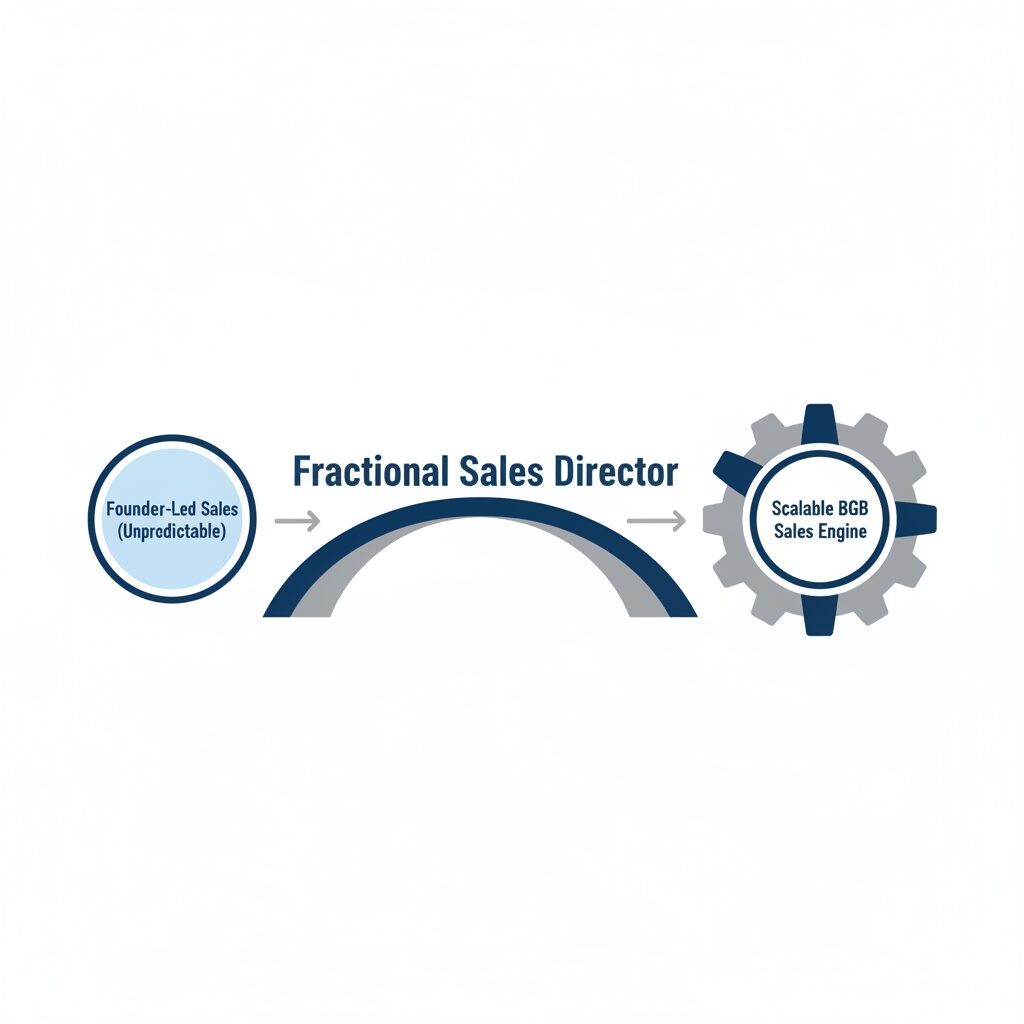
This financial flexibility is vital during Series A. It allows the board to allocate capital toward performance marketing or engineering while the fractional leader ensures the sales team hits their quotas. The goal is a predictable revenue stream that makes Series B funding a formality rather than a struggle. When you look at the Founder Led Sales India roadmap, the fractional stage is the bridge that prevents the ‘Series A chasm’ where many startups fail due to high burn and low sales velocity.
Embedding Leadership: More Than Just Consulting
Unlike traditional consultants who deliver a 50-page slide deck and leave, a Fractional Sales Director is an embedded leader. They join your Slack, lead your Monday morning stand-ups, and join your high-stakes closing calls. They are accountable for the revenue target. In practice, this means they are identifying why the sales team is not hitting targets and fixing it in real-time.
They also manage the tech stack. In 2026, AI-driven sales tools are mandatory, but many founders over-purchase software they don’t use. A fractional leader streamlines this, ensuring your RevOps vs Sales Ops structure is lean and functional. They ensure every rupee spent on the sales stack contributes to a shorter sales cycle.
Moving Beyond the Founder-Led Stage
The hardest part of scaling is the founder letting go. Founders often worry that no one can sell the vision like they can. While true, a vision doesn’t scale; a process does. A Fractional Sales Director takes your vision and codifies it into a sales script, a demo flow, and a proposal template that a hired sales rep can execute. This is the only way to stop being the only salesperson in your company.
By May 2026, the trend is clear: successful Series A founders are no longer hiring ‘expensive bets’ for their first sales leadership role. They are hiring fractional experts to build the foundation first. This approach ensures that when the time comes to hire a full-time VP, the engine is already humming, and the risk of a ‘bad hire’ is minimized because the requirements of the role are clearly defined by the fractional predecessor.
Frequently Asked Questions
What exactly does a Fractional Sales Director do?
They act as your part-time head of sales, building your pipeline architecture and managing your team. They focus on creating a repeatable process so the founder is no longer the primary closer.
How does this preserve my Series A runway?
You avoid the ₹1.6 Crore+ cost of a full-time VP of Sales. By paying only for the time you need, you redirect capital to growth-critical areas like product and marketing.
Is a fractional leader better than a sales consultant?
Yes, because they are an embedded leader who takes accountability for revenue targets. Consultants usually provide advice, while fractional directors execute the strategy alongside your team.
How long do fractional engagements usually last?
Most Series A startups retain a fractional leader for 6 to 18 months. This provides enough time to build a scalable engine and transition to a full-time hire when revenue justifies it.
Can they help with hiring my first full-time sales team?
Absolutely, they define the roles and interview candidates to ensure you hire for skill rather than personality. This prevents the high cost of turnover in early-stage sales teams.
Does this model work for B2B SaaS startups in India?
It is particularly effective for B2B SaaS where sales cycles are long and require a structured approach. They help shorten the cycle by implementing professional follow-up and lead scoring systems.
Will they join my investor meetings?
Many fractional leaders support founders during board meetings and investor updates. They provide the data-driven confidence that your revenue engine is professional and predictable.
How do I know if I’m ready for a fractional leader?
If you are a founder spending more than 50% of your time on sales or if your pipeline feels like guesswork, you are ready. It is the vital step to move beyond founder-led growth.
This May 2026, professionalize your sales engine and protect your runway with Sales Fundas. Start your free sales assessment to identify the gaps in your Series A growth strategy today.