

Set realistic B2B revenue targets for the 2026-27 Indian FY. Learn to move beyond founder-led sales with pipeline discipline and data-driven KPIs.
April 23, 2026, marks the end of the first three weeks of the new Indian financial year. For most B2B founders, the initial adrenaline of April 1st is fading, replaced by the weight of a revenue number that feels more like a wish than a work plan. If your targets for the 2026–27 cycle were set based on last year's expenses or investor expectations rather than your actual sales engine capacity, you are already behind.

Setting revenue targets for the 2026–27 financial year requires a shift from optimism to pipeline discipline. In my 30 years of B2B experience, I have seen that the most successful companies do not just pick a number; they build a repeatable system that makes that number inevitable. This Q1 kickoff is the time to audit your process before the "feast or famine" cycles of the monsoon quarter begin to stall your momentum.
Building targets on data not hope
Most founders fall into the trap of looking at their bank balance to determine their sales goals. They see the overheads for 2026, add a profit margin, and call it a target. This is backward. A functional sales engine starts with your historical conversion rates. If you closed 10% of qualified leads in 2025, assuming you will suddenly close 30% in 2026 without a structural change is a recipe for a missed quarter.
Start by calculating your average deal size and sales cycle length from the previous year. If your average deal takes four months to close, the revenue you need in August 2026 must be in your pipeline today. When the b2b sales process is broken, it usually shows up as a "pipeline that reflects optimism" rather than reality. You must scrub your current leads of any "zombie deals" that have been sitting for more than two sales cycles.
Defining KPIs that drive activity
Revenue is a lagging indicator. It tells you what you did right three months ago. To manage the 2026–27 financial year effectively, you need leading indicators that track daily discipline. For a B2B startup in India, three specific metrics matter more than others during this Q1 kickoff.
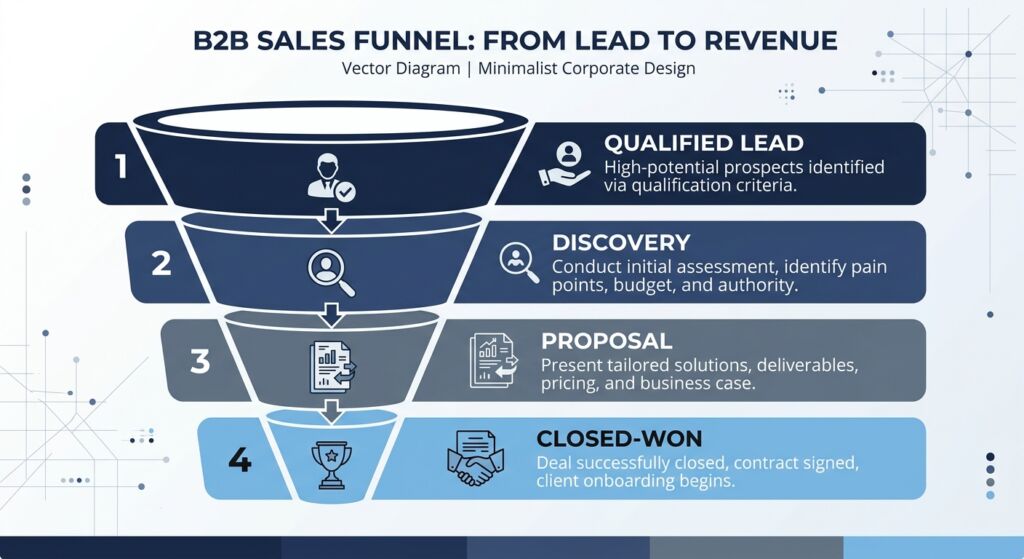
First, track your first meeting success rate. This measures how many initial conversations actually progress to a discovery or proposal stage. If this number is low, your team is taking every meeting rather than qualifying B2B companies properly. Second, monitor pipeline velocity. This is the speed at which a deal moves from a lead to a signed contract. Third, measure the ratio of new business versus account expansion. In the current 2026 market, keeping and growing existing clients is often more cost-effective than pure cold acquisition.
Avoiding the founder trap in Q1
Many CEOs are still the primary closers in their business. This works at ₹1Cr ARR, but it fails at ₹10Cr. If every important deal still goes through you, you haven't built a sales function; you have built a job for yourself. This April, your goal should be to move toward a structured process that junior reps can follow without your constant intervention.
The founder trap often leads to a "no process to hand over" situation. You win deals because of your personal expertise, but that doesn't scale. A 2026 Q1 strategy must include documented sales playbooks. When you have a defined process, you can identify exactly why the sales team is not hitting targets. Usually, it is because they are trying to mimic your intuition instead of following a repeatable system.
Practical steps for the 2026-27 kickoff
Execution beats strategy every time. To ensure your Q1 kickoff actually changes your revenue trajectory, you need to implement three specific milestones by the end of April. Start with a honest assessment of your current team. Are they "order takers" or proactive sellers? If they are waiting for the phone to ring, your Q1 will be a struggle.
Next, establish a weekly pipeline review that focuses on written feedback. Instead of asking "when will it close?", ask "what is the specific blocker preventing the next step?" This shift in questioning forces your reps to think about the buyer's journey rather than their own commission. Finally, commit to a 3-month minimum period of intense process discipline. High-growth B2B sales do not happen overnight; they are built through monthly milestones and daily accountability.
Answering common Q1 sales strategy questions
How do I set a realistic growth target for 2026-27?
Base your growth on your current lead generation capacity plus a 15% efficiency gain from process improvements. Do not double your target unless you have doubled your qualified lead flow.
What is the most important KPI for a B2B founder in Q1?
The percentage of deals that move from Stage 1 to Stage 2 within your defined sales cycle length. This indicates if your pipeline is healthy or just full of stagnant leads.
How do I handle a sales team that is already missing April targets?
Conduct a direct audit of their calendars. If they aren't spending 60% of their time in front of customers or on discovery calls, the problem is activity, not ability.
Should I hire more salespeople at the start of the financial year?
Only if your current reps are consistently hitting 80% of their quota and your pipeline is overflowing. Hiring to fix a bad process only results in more people failing.
What if my industry is seeing a slowdown in 2026?
Focus on high-intent qualification. In a slow market, you cannot afford to waste time on "window shoppers" who don't have a budget or a timeline.
How often should I review revenue targets?
Review the progress weekly, but only adjust the target quarterly. Constant changes to the goalpost destroy team morale and accountability.
What is the quickest way to increase pipeline velocity?
Remove the friction in your contract and proposal process. Often, deals stall because the internal paperwork is too complex for the buyer to navigate.
How do I move away from founder-led sales this year?
Start by documenting every objection you hear and your specific response to it. This becomes the foundation of a training manual for your first senior sales hire.
This Start of Q1 / New Financial Year Strategy, stop relying on gut feel and start building a predictable revenue engine with Sales Fundas. If you are ready for an honest assessment of your current sales function, book a Free Sales Audit Call today. I will provide a written 2–3 page feedback note within 48 hours, highlighting exactly where your process is leaking revenue.