

Is your B2B sales cycle too long in India? Stop deal slippage with our 2026 framework to increase sales velocity and close Indian corporate deals faster.
Why Your B2B Sales Cycle is Too Long in India: The Root Causes
Most Indian B2B founders believe their six-month sales cycle is normal. It is not. In 2026, a prolonged sales cycle is rarely a product problem; it is almost always a structural failure in the sales engine. When a deal drags on for nine months in a mid-market Mumbai or Bangalore firm, you are likely losing money on the cost of acquisition before the contract is even signed.
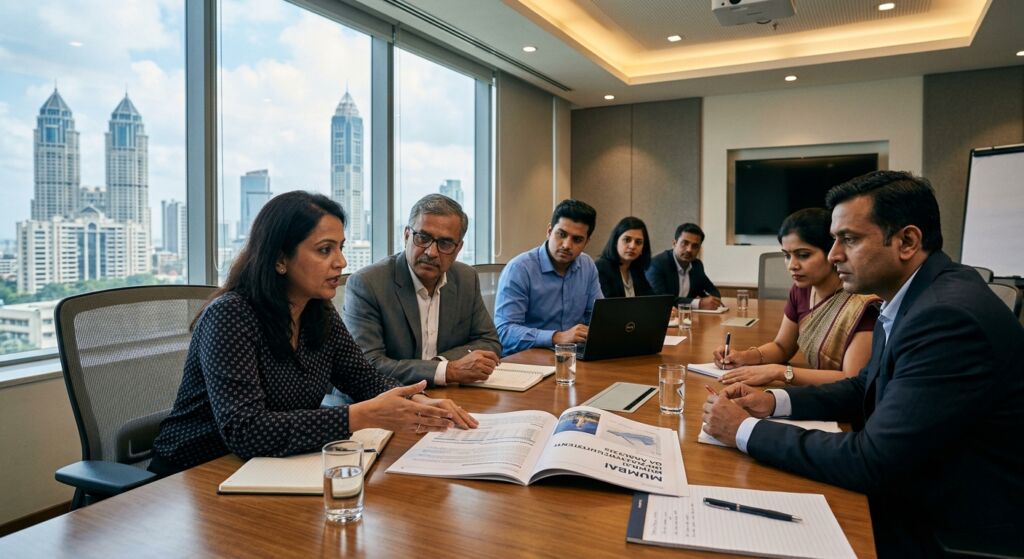
We see this often at Sales Fundas. A founder manages the early stages well but lacks the pipeline discipline to push the deal through procurement or legal. The result is a feast or famine revenue pattern that prevents you from hiring your first real sales team. If you want to stop the bleed, you must stop treating sales as a series of meetings and start treating it as a repeatable system.
The hidden cost of founder-led sales inertia
In many Indian startups, the founder is the only person who can close. You handle the pitch, the demo, and the negotiation. This creates a bottleneck. Because you are busy running the company, you cannot follow up with the intensity required to navigate Indian corporate hierarchies. Deals do not die; they simply enter a state of permanent hibernation. This is the classic founder led sales India trap where the CEO becomes the most expensive bottleneck in the company.
By April 2026, the B2B buying environment in India has shifted. Procurement teams are more tech-savvy and use AI-driven vendor evaluation tools. If your sales process is not documented and visible, you lose trust. Trust in B2B is earned through consistency, not just a good relationship over coffee. When the b2b sales process is broken, the buyer senses the chaos and retreats to the safest option: doing nothing.
Navigating the Indian B2B Buying Committee: Who Actually Says ‘Yes’?
In the Indian corporate landscape, a ‘long sales cycle’ is often just a symptom of an unidentified buying committee. Most sales teams make the mistake of selling to a single champion. However, in 2026, the average mid-market Indian deal involves 5 to 9 stakeholders.
To shorten your cycle, you must map the committee early:
- The User: Cares about features and daily efficiency. They want the problem gone.
- The Technical Gatekeeper: (IT/Security) Cares about integration and risk. They are often the primary cause of ‘permanent hibernation.’
- The Economic Buyer: (CFO/Founder) Cares about ROI and cash flow. They don’t care about features; they care about the bottom line.
- The Procurement Officer: Cares about compliance and price benchmarking.
If you are only talking to the User, your deal will stall the moment it hits the CFO’s desk. The fix is Multi-Threading. Ensure you have a documented relationship with at least three of these personas before you send the final proposal. This prevents the ‘single point of failure’ that drags Indian B2B cycles into the 9-month territory.

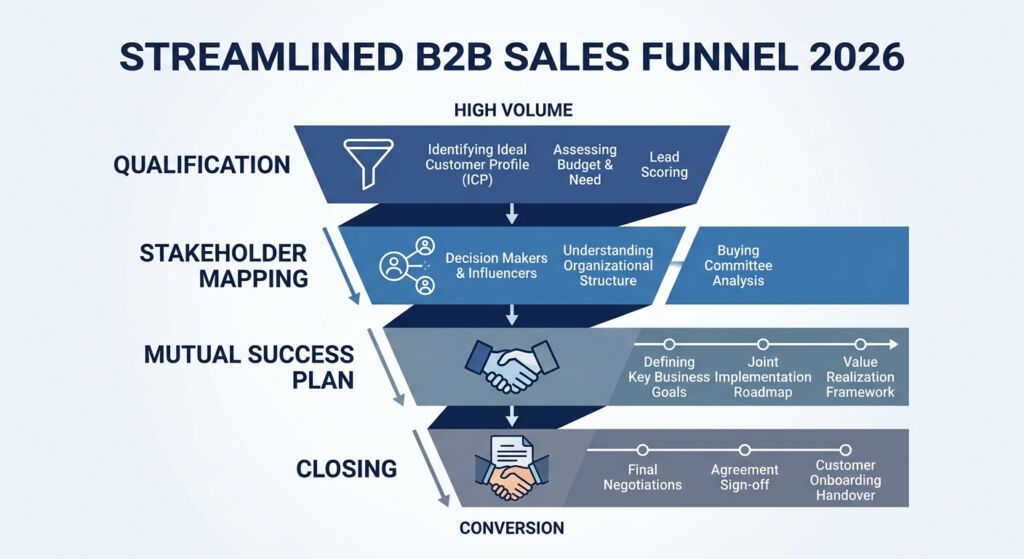
1. Aggressive Qualification: How to Shorten the B2B Sales Cycle
The fastest way to shorten your sales cycle is to disqualify leads earlier. Many sales teams in India spend months chasing companies that will never buy because they fear an empty pipeline. They take every meeting. They send every proposal. This optimism is a liability. You need a pipeline that reflects reality, not hope.
In our work with manufacturing and tech firms, we implement a strict qualification framework. If the prospect cannot define the cost of their current problem in rupees, they are not ready for a proposal. According to a 2026 Sales Fundas internal audit, firms that disqualified 30% more leads in the first week saw a 22% reduction in overall cycle time. They stopped wasting time on ‘research-only’ stakeholders and focused on the people with budget authority.
The Math of Sales Velocity: How to Quantify Your Progress
You cannot fix what you cannot measure. Most Indian firms track ‘Cycle Length’ as a static number, but the real metric for growth is Sales Velocity. This formula tells you exactly how much revenue is moving through your pipeline per day.
The Formula:
Sales Velocity = (Number of Opportunities × Average Deal Value × Win Rate) ÷ Length of Sales Cycle
To push your B2B sales cycle shorter in India, you have four levers:
- Increase Opportunities: Better lead gen (top of funnel).
- Increase Deal Value: Better packaging and pricing strategy.
- Increase Win Rate: Better qualification and closing techniques.
- Decrease Cycle Length: The focus of this guide.
By focusing solely on the ‘cycle length’ without looking at the win rate, you risk disqualifying too many leads and killing your velocity. The goal is not just a fast cycle, but a profitable one. If you reduce your cycle by 20% but your win rate drops by 30%, you have actually slowed down your revenue growth.
2. Implement Mutual Success Plans to Eliminate Deal Slippage
Stop sending generic follow-up emails asking if they have ‘had a chance to look at the proposal.’ These add no value. Instead, use a Mutual Success Plan. This is a shared document that outlines every step from the first demo to the implementation date. It includes the buyer’s internal milestones, like board meetings or IT security audits.
This plan shifts the dynamic. You are no longer a vendor trying to sell; you are a partner managing a project. If a prospect refuses to agree to a timeline, you know the deal is not real. You can then reallocate your energy to high-intent accounts. This level of pipeline discipline is what separates top-tier sales functions from those just ‘checking in’ every two weeks.
3. Solving the Procurement and Legal Bottleneck in Indian Corporates
In the Indian context, the ‘final stage’ is often where deals go to die. Legal and procurement departments in large Indian corporates are designed to manage risk, not speed. If you wait until the end of the cycle to involve them, you add three months to your timeline. Successful sales heads in 2026 introduce the contract template and security requirements during the middle of the evaluation, not the end.
Jayant Kelkar often advises clients to provide a written feedback note within 48 hours of any major stakeholder meeting. This note should summarize the business impact and the next technical step. It keeps the momentum high. If you are struggling to hit targets because of these delays, you may need a virtual chief sales officer to audit your closing sequence and remove the friction.
Managing the committee buy
Buying in India is rarely a solo sport. Even if the CEO says yes, the CFO, the IT Head, and the Department Head can all veto the deal. If you only talk to your ‘champion,’ you are vulnerable. You must map the entire decision-making unit. Every stakeholder has a different definition of value. The CFO cares about ROI; the IT Head cares about security; the end-user cares about ease of use.
If your team is failing to navigate these groups, it might be time for industrial sales training that focuses on consultative selling rather than just product features. By addressing the concerns of the entire committee simultaneously, you prevent the ‘ghosting’ that happens when one department stops the project behind closed doors.
Frequently Asked Questions
Why is the B2B sales cycle so long in India compared to the US? Indian corporate culture is highly consensus-driven and risk-averse, requiring more stakeholder approvals at every stage. Additionally, procurement processes often prioritize price negotiation over speed of implementation.
How can I tell if a deal is actually stuck or just moving slowly? A deal is stuck if there has been no movement on agreed-upon milestones for more than two weeks. If the prospect stops sharing internal data or stops responding to the Mutual Success Plan, the deal is likely dead.
Does AI help shorten the sales cycle in 2026? AI tools now assist in faster lead qualification and automated follow-ups, but they cannot replace the human trust needed to close large B2B contracts. Use AI for data, but rely on senior expertise for the final negotiation.
How many stakeholders are usually involved in an Indian B2B deal? In 2026, the average mid-market deal involves 6 to 9 stakeholders across finance, IT, and operations. Missing even one of these people can stall a deal for months.
Should I offer a discount to close a deal faster? No, discounting for speed often signals desperation and devalues your brand. Instead, offer a ‘fast-track implementation’ bonus or a trial period to reduce the buyer’s perceived risk.
What is the ideal B2B sales cycle length for a SaaS product in India? For a mid-market SaaS solution, the target should be 90 to 120 days. Anything beyond 180 days suggests a lack of process or poor qualification at the top of the funnel.
How do I handle a prospect who says "contact me next quarter"? Ask what specifically will change next quarter. If they cannot give a concrete reason, like a budget cycle or a project launch, it is a polite rejection and you should move on.
Can a Fractional CSO help with long sales cycles? Yes, a fractional chief sales officer brings the experience to identify exactly where the process is leaking and implements the structure needed to close faster.
Stop the pipeline bleed today
A long sales cycle is a choice. You can choose to continue the feast-or-famine cycle, or you can choose to build a structured sales function that delivers predictable revenue. At Sales Fundas, we don’t give you theory or generic slides. Jayant Kelkar provides a direct, honest assessment of your current sales engine and helps you build a repeatable system that works for your specific team.
If you are ready to stop being the only person closing deals and want a pipeline that reflects reality, book a Free Sales Audit Call. We will provide a written 2–3 page feedback note within 48 hours, highlighting exactly where your deals are stalling. No obligation, no sales pitch—just practical steps to fix your sales engine.
Sales Fundas operates as an embedded leadership partner for ambitious B2B founders and CEOs, specializing in pipeline architecture and predictable revenue growth. By combining rigorous sales consulting frameworks with advanced digital advertising and performance marketing, we build sustainable, high-performing sales engines that complement and scale the founder's strategic vision.
- Embedded Leadership for B2B Growth
- Sales Pipeline & Revenue Architects
- B2B Sales Engine Development
- Strategic Sales Scaling Experts