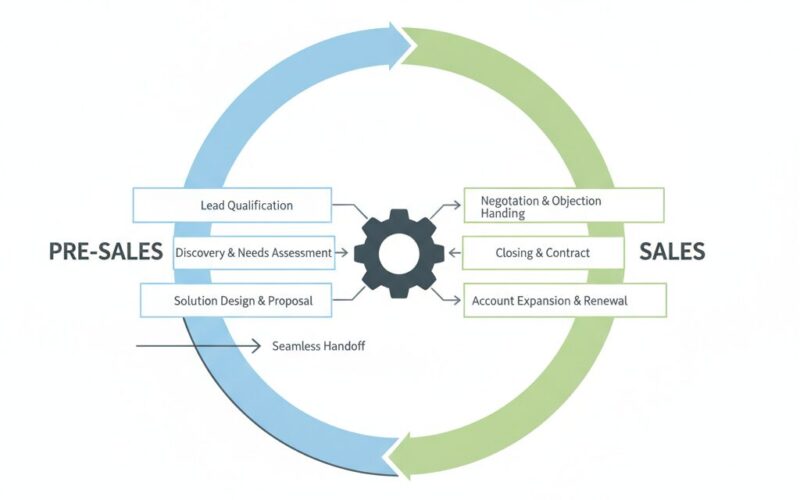

RevOps vs. Sales Ops: Learn why Indian B2B firms are shifting to RevOps for 2026 growth. Fix your revenue engine before the Bengaluru SaaS Summit on June 9.
The 2026 Revenue Reality Check
Sales operations keeps your sales team running. Revenue operations keeps your entire business growing. If you are heading to the India SaaS & Marketing Tech Summit in Bengaluru on June 9, you will hear this distinction repeated in every keynote. The difference is not just semantic; it is the difference between a sales team that hits targets and a company that scales predictably.

In our work at Sales Fundas, we see founders confusing these two roles constantly. Sales Ops is the engine room of the sales department, focusing on CRM hygiene, quota setting, and territory management. RevOps is the architect of the entire revenue lifecycle, bridging the gaps between marketing, sales, and customer success to stop revenue leakage. For an Indian SME aiming for ₹100 Crore in ARR, choosing the wrong structure creates friction that no amount of hiring can fix.
Sales Ops is the Engine of the Sales Silo
Think of Sales Ops as the mechanic. They ensure the sales team has the tools, data, and processes to close deals. Their world revolves around the CRM and the sales pipeline. They handle the technical debt of a messy HubSpot or Salesforce instance. They calculate commissions and make sure the sales deck is updated.
But Sales Ops stops at the borders of the sales department. They rarely look at how marketing leads are qualified or how customers are handed off to the success team. This siloed focus worked in 2022. In 2026, it is a liability. According to recent 2026 benchmarks, companies relying solely on Sales Ops see a 14% higher churn rate due to poor post-sale handoffs. If your revenue is too founder-dependent, Sales Ops alone will not save you. You need a 2026 B2B sales strategy that looks beyond the ‘close’.
RevOps is the Architect of the Revenue Engine
RevOps treats revenue as a single, continuous process. It ignores departmental boundaries to focus on the customer journey. When you move to a RevOps model, you align your data across the entire organization. Marketing spend is no longer a separate spreadsheet; it is the top of the same funnel that Customer Success uses to track renewals.
This approach is why the India SaaS & Marketing Tech Summit has dedicated an entire track to RevOps this June. Indian B2B founders are realizing that ‘growth at all costs’ is dead. Efficiency is the new North Star. RevOps provides the predictable revenue model that investors now demand. It identifies where deals get stuck—not just in the sales stage, but in the transition from a marketing lead to a sales-qualified opportunity.
Why Bengaluru is Talking About RevOps vs. Sales Ops Now
The timing of the India SaaS & Marketing Tech Summit on June 9 is perfect. The Indian B2B ecosystem is maturing. Founders are moving away from hiring ‘rockstar’ individuals and toward building a scalable B2B sales engine. You cannot scale an engine if the parts do not talk to each other. Sales Ops makes the sales part faster, but RevOps makes sure the sales part is actually connected to the rest of the machine.
In practice, this means your data is clean and unified. When a customer in Mumbai complains about a product feature, RevOps ensures that feedback flows back to the sales team so they stop promising that feature to prospects. It creates a feedback loop that Sales Ops, in its narrow focus, often misses. This is exactly how we help companies through Fractional CSO services—by building the architecture first, then driving the performance.
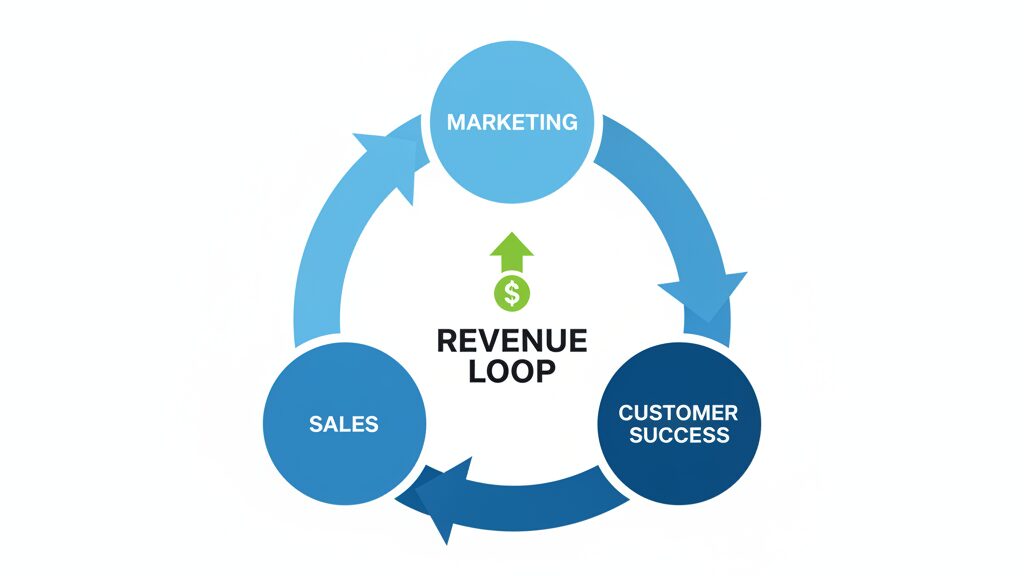
4 Shifts Defining the 2026 Revenue Landscape
The transition from Sales Ops to RevOps requires a change in mindset. It is not about changing job titles; it is about changing how you measure success. Here are the shifts we are seeing in the market today.
1. From Sales Quotas to Lifetime Value
Sales Ops focuses on the quarterly target. RevOps focuses on the lifetime value (LTV). In the 2026 Indian market, the cost of acquisition (CAC) has risen by nearly 22% compared to 2024. You can no longer afford to close ‘bad fit’ customers just to hit a monthly number. RevOps aligns the Ideal Customer Profile (ICP) across marketing and sales to ensure every deal closed is a deal that stays.
2. Data Integration vs. Data Silos
Most SMEs have ‘data islands’. Marketing uses one tool, sales uses another, and finance uses a third. RevOps builds a single source of truth. When you look at your dashboard, you see the real cost of a lead and its eventual revenue contribution. This eliminates the ‘no guesswork’ problem many founders face when trying to predict next month’s pipeline.
3. The Rise of Embedded Leadership
Many Indian startups cannot afford a full-time Chief Revenue Officer. This has led to the rise of the Fractional CSO who functions as a RevOps architect. They provide the high-level strategy without the ₹1.5 Crore annual salary. This leader ensures that Sales Ops tasks are being executed within a RevOps framework.
4. AI as the Glue, Not Just the Tool
As discussed in our recent piece on how AI is changing sales, 2026 is the year of Agentforce and autonomous revenue agents. RevOps is responsible for managing these agents across the funnel. While Sales Ops might use AI to write emails, RevOps uses AI to predict which leads will churn three months before they do.
Measuring the ROI of the Shift
If you are debating which path to take before the Bengaluru summit, look at your ‘leaky bucket’. If your sales team is busy but revenue is flat, you have an alignment problem, not a sales problem. Research from 2025 indicates that companies with aligned revenue functions grow 19% faster than those without. In 2026, that gap is widening as AI-driven competitors use RevOps to outpace manual sales processes.
Start by auditing your handoffs. Ask your marketing team what happens to a lead after it is passed to sales. If the answer involves a ‘handover’ and then silence, you are losing money. RevOps replaces that handover with a continuous flow. This is the core of fixing a broken B2B sales process in the current Indian climate.
Frequently Asked Questions
What is the main difference between RevOps and Sales Ops?
Sales Ops focuses exclusively on the efficiency of the sales team and CRM management. RevOps aligns marketing, sales, and customer success to optimize the entire revenue lifecycle.
When should a startup switch from Sales Ops to RevOps?
The switch should happen when you have multiple departments interacting with customers. Usually, this is when you reach ₹10–15 Crore in revenue and departmental silos begin to slow down growth.
Is RevOps just a fancy name for Sales Ops?
No, because the scope is much broader. RevOps has authority over marketing and success data, whereas Sales Ops usually reports only to the VP of Sales.
Does RevOps replace the need for a Sales Manager?
No, RevOps supports the Sales Manager by providing better data and smoother processes. The Sales Manager focuses on coaching people, while RevOps focuses on the system.
What tools are essential for a RevOps team in 2026?
A unified CRM like HubSpot or Salesforce is the base. You also need data integration tools, AI-driven forecasting platforms, and a shared customer success dashboard.
How much does it cost to implement a RevOps structure in India?
Costs vary, but hiring a full-time RevOps manager starts around ₹18–25 Lakhs annually. Many SMEs opt for a Fractional CSO to build the strategy for a fraction of that cost.
Can Sales Ops transition into a RevOps role?
Yes, but it requires learning the nuances of marketing funnels and customer success metrics. It is a shift from tactical execution to strategic architecture.
Why is the India SaaS & Marketing Tech Summit focusing on this?
Because Indian B2B companies are facing tighter margins and higher competition. Efficiency through RevOps is the primary way to maintain profitability while scaling in 2026.
Take the Next Step for Your Revenue Engine
The distinction between RevOps vs. Sales Ops will determine your growth trajectory for the rest of the year. Don’t wait until your pipeline dries up to fix your architecture. This India SaaS & Marketing Tech Summit (Bengaluru), audit your revenue engine with Sales Fundas to ensure your 2026 targets are within reach. Book a free 30-minute revenue transformation diagnostic today—no credit card or commitment required.