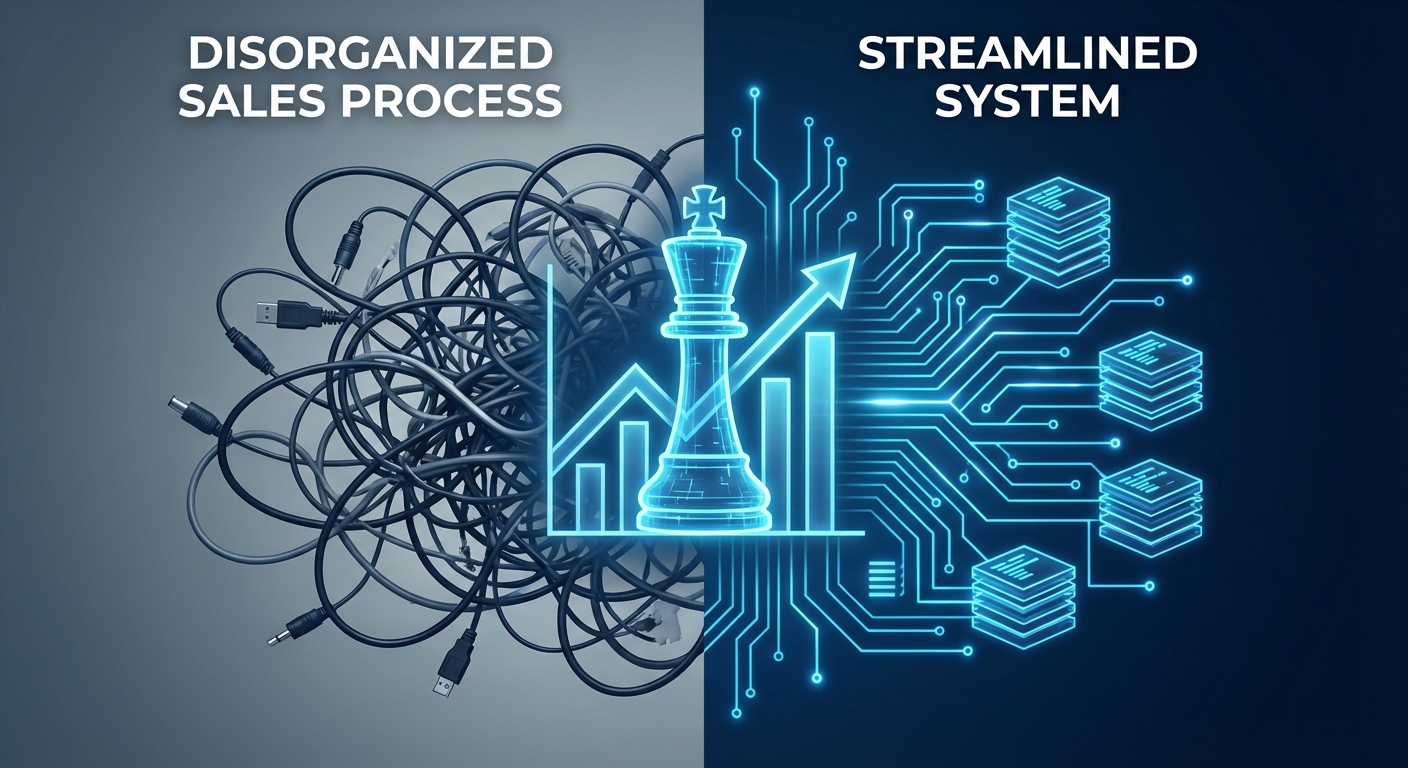
Stop Hiring Expensive VPs Before You Have a Process
Let’s talk about the elephant in the boardroom.

You are a Founder. You built the product. You landed the first ten clients. You are the company’s best salesperson. And frankly? You are exhausted.
So, the logical next step usually looks like this: You go out and hunt for a “rockstar” VP of Sales. You promise them a massive base salary, significant equity, and a corner office (real or virtual). You expect them to come in with a magic wand and turn your chaotic hustle into a predictable revenue machine.
Six months later? You fire them.
Why? Because you didn’t need a pilot; you needed someone to build the plane first. You hired expensive talent to fly a machine that was still being assembled. This is the classic Founder-Led Sales dilemma.
Enter the Virtual Chief Sales Officer (vCSO). This isn’t just a consultant who gives you a PowerPoint and invoices you. This is the architect who builds the engine so your future team can drive it.
What is a Virtual Chief Sales Officer? (And What They Are Not)
Think of a vCSO as “Sales Leadership as a Service.”
A Virtual Chief Sales Officer is a senior sales executive who works with your company on a fractional or retainer basis. They provide the strategic oversight, process design, and accountability of a C-level hire, but at a fraction of the cost and risk.
Here is what they are NOT:
- They are not a glorious sales trainer who just pumps up the team with motivation.
- They are not a lead generation agency sending cold emails.
- They are not a temporary placeholder.
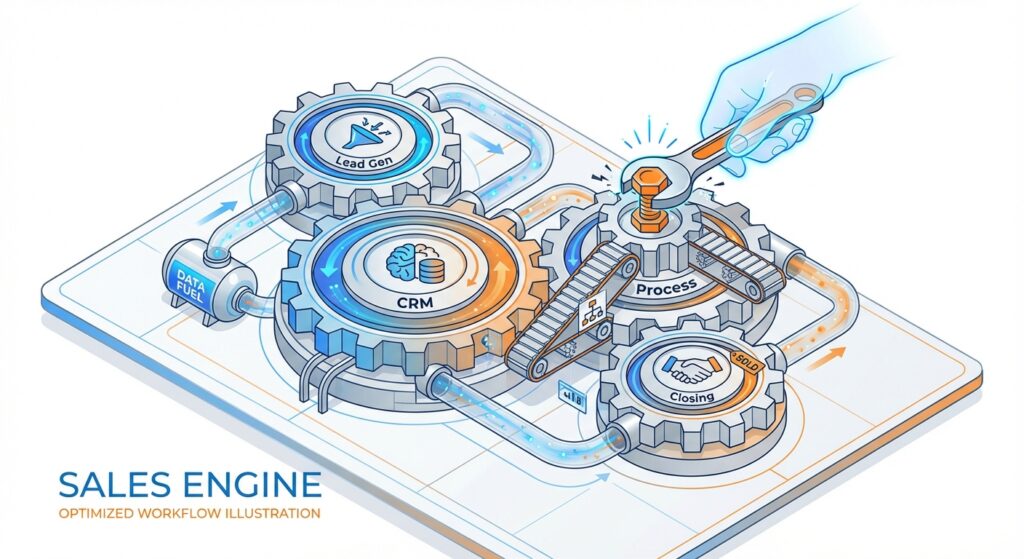
At Sales Fundas, Jayant Kelkar, we define the role differently. We see the vCSO as an engineer. We look at your revenue funnel the way a mechanic looks at an engine. Where is the friction? Why is the fuel (leads) leaking before it reaches the combustion chamber (closing)?
We fix the mechanics. Then we step on the gas.
The “Messy Middle”: When Do You Actually Need One?
Most companies wait too long.
They wait until revenue flatlines. Or until the Founder is spending 40 hours a week on calls and 0 hours on product vision. But there are earlier warning signs. If you find yourself nodding along to these points, it is time to look for help.
1. The “Gut Feel” Problem
Ask your current sales lead (or yourself) this: “How much revenue will we close next month?”
If the answer starts with “I feel like…” or “We hope to…”, you are in trouble. Sales is not an art; it is a science. A vCSO implements rigorous forecasting models. We move you from “gut feel” to data-driven certainty. Read more about this shift in our guide on how data is ending the era of gut feel.
2. The CRM Wasteland
You have a CRM. Maybe it’s HubSpot, maybe it’s Zoho. But nobody uses it correctly. It’s a digital graveyard where leads go to die. Data entry is inconsistent, and reports are meaningless.
A Virtual Chief Sales Officer doesn’t just nag people to update fields. They re-architect the system. They ensure that marketing tools integrate seamlessly with your Sales CRM so that no opportunity slips through the cracks.
3. The “Hero” Culture
Do you have one sales rep who brings in 80% of the revenue? That is a vulnerability, not a victory. If that person leaves, you are sunk. A vCSO builds a system where the process drives revenue, not individual heroism. This is how you build a scalable sales engine rather than a collection of lone wolves.
The 4-Step vCSO Framework
So, what does the work actually look like? When we step in as a Virtual Chief Sales Officer, we don’t start by yelling at the sales team to make more calls. We start with the infrastructure.
Step 1: The Forensic Audit
We tear apart your current process. We listen to call recordings. We look at email chains. We analyze the conversion rates between stages. We usually find hidden process leaks that are silently killing your deals.
Step 2: The Tech Stack Re-Wire
Tools are useless without strategy. We configure your CRM to match the buyer’s journey. We set up automations to handle the busy work so your humans can focus on selling. For startups, getting this right early is mandatory. (Check out our Anti-Chaos Blueprint for CRM setup).
Step 3: The Playbook
If it isn’t written down, it doesn’t exist.
We create the Sales Playbook. Scripts, objection handling, email templates, and proposal standards. This ensures that a new hire can become productive in weeks, not months. We define the clear difference between an MQL and an SQL so marketing and sales stop fighting and start closing.
Step 4: The Rhythm
Weekly pipeline reviews. Monthly forecasting. Quarterly business reviews. We instill a heartbeat into the sales organization. Accountability isn’t accidental; it is scheduled.
The Math: Why Renting Beats Buying
Let’s look at the numbers. Because sales is always about the numbers.
To hire a full-time, experienced Chief Sales Officer or VP of Sales in 2024/2025, you are looking at a base salary, plus commissions, plus benefits, plus equity. The total cost of ownership is massive. And if they fail? You are out six figures and six months of time.
A Virtual Chief Sales Officer costs a fraction of that full-time package. But the value goes beyond savings.
You get high-level expertise immediately. You don’t pay for “down time” or office politics. You pay for output, strategy, and results. We have broken down the specific financial advantages in our article: Fractional CSO vs. Full-Time VP: The Math.
Why Sales Fundas?
There are plenty of consultants out there who will give you advice.
But at Sales Fundas, led by Jayant Kelkar, we don’t just offer advice. We offer architecture. We have spent decades in the trenches of manufacturing and SaaS sales. We know that B2B sales isn’t about charisma; it is about trust and process.
We understand that leadership isn’t just about hitting a number. It is about the architecture of trust you build with your team and your market.
Frequently Asked Questions
What is the difference between a Sales Consultant and a vCSO?
A consultant usually advises on a specific project or problem. A vCSO takes ownership of the sales function, acting as an integrated executive member of your leadership team to drive long-term strategy and execution.
How much time does a Virtual CSO dedicate to my business?
It depends on your needs, but typically a vCSO dedicates a few hours per week to high-level strategy and pipeline reviews. The focus is on impact and outcome, not hours clocked in a chair.
Can a vCSO help hire my permanent sales team?
Absolutely. One of the primary roles of a vCSO is to design the hiring profile, interview candidates, and onboard the permanent VP of Sales who will eventually replace them.
Is a vCSO suitable for early-stage startups?
Yes, it is often the perfect fit. Early-stage startups need high-level strategy to find product-market fit but cannot afford a full-time executive salary.
How long does a vCSO engagement last?
Engagements typically last from 6 to 18 months. The goal is to build the machine, get it running smoothly, and then hand the keys over to a full-time leader.
Do you work with our existing CRM?
Yes. We audit and optimize your existing stack. If your current tool is holding you back, we will recommend a migration, but we prefer to fix what you have first.
What industries do you specialize in?
We specialize in complex B2B sales environments, particularly in manufacturing, engineering, and SaaS, where the sales cycle is long and consultative.
Will the vCSO close deals for us?
Generally, no. A vCSO is a coach and strategist, not a player. However, we often join high-stakes calls to support the Founder or sales reps and demonstrate proper technique.
Ready to Stop Guessing?
You can keep trying to be the CEO and the VP of Sales at the same time. You can keep burning the candle at both ends.
Or you can bring in a Virtual Chief Sales Officer to build a sales engine that runs without your constant intervention.
Let’s audit your process. Let’s fix the leaks. Let’s get you back to being a Founder.
Contact Sales Fundas today to discuss if a vCSO is the right move for your revenue goals.