

There is a specific, recurring nightmare that haunts B2B Founders and Sales Directors. Maybe you’re living it right now.

You have a product that works. You have a marketing budget that isn’t zero. You have a sales team that looks busy. They are typing. They are on calls. The CRM has data in it.
But then the quarter ends.
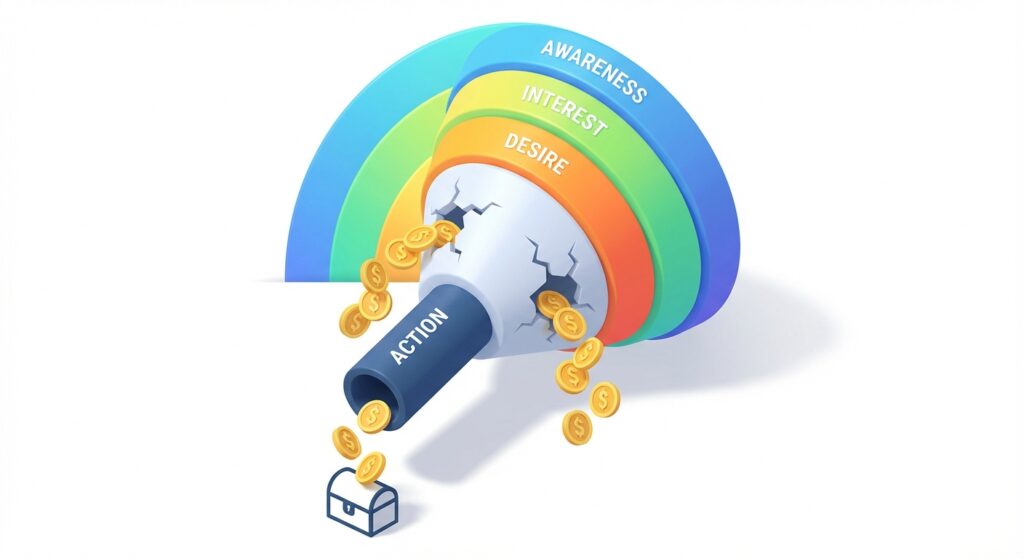
The revenue numbers are flat. Stagnant. Deals that were marked as “sure things” have vanished into the ether. Your pipeline looks full from a distance, but nothing is dripping out of the bottom.
It’s frustrating. It’s expensive.
If this sounds familiar, stop blaming the market. Stop blaming the product. The problem is hidden deep inside the mechanics of your sales engine. To fix it, you need to stop guessing. You need to strip the engine down and look at the parts.
You need to know how to audit B2B sales process flows from top to bottom.
A sales audit isn’t a witch hunt. It’s a diagnostic. It is the only reliable way to tell the difference between a personnel issue, a messaging mismatch, or a structural failure. In this guide, we are going to break down a comprehensive 30-point checklist. It will help you identify bottlenecks, streamline operations, and prepare your team for the kind of growth Sales Fundas builds for clients every day.
Why You Need to Know How to Audit B2B Sales Processes
Before we get to the checklist, let’s get clear on the objective.
Too many founders treat sales as an art form. They think it relies on charisma, luck, and finding a “rockstar” who can sell ice to penguins. But scalable revenue isn’t magic. It’s science. It’s engineering.
When you learn how to audit B2B sales process efficiency effectively, you achieve three specific outcomes:
- Reduced Friction: You find the silly, unnecessary steps that slow down deal velocity and kill them.
- Higher Conversion Rates: You stop losing leads to “black holes” in the funnel.
- Predictability: You move from “hoping” for revenue to accurately forecasting it.
If you are struggling to understand why deals aren’t closing, check out our guide on why sales teams fail due to hidden process leaks.
Phase 1: Lead Generation & Qualification (Top of Funnel)
Garbage in, garbage out.
The quality of your revenue is determined by the quality of your leads. If you are dumping bad leads into the hopper, even the best sales closers in the world won’t be able to hit their targets. An audit here focuses on definition and entry.
The Audit Checklist:
- ICP Clarity: Is your Ideal Customer Profile (ICP) written down? Do Sales and Marketing agree on it? Ask a sales rep to define the ICP. Then ask a marketer. If the answers are different, you have a problem.
- Lead Scoring: Do you have a system to rank leads? Are “hot” leads clearly distinguishable from tire-kickers? If your team treats every inquiry with the same urgency, they are wasting time.
- Source Attribution: Can you track exactly where your best leads come from? (e.g., LinkedIn, referrals, SEO). You can’t double down on what works if you don’t know what works.
- Response Time: Speed matters. What is the average time between a lead coming in and a rep reaching out? Ideally, this should be under an hour. If it’s 24 hours, you are losing deals to competitors who are simply faster.
- Qualification Framework: Does your team use a standardized framework like BANT (Budget, Authority, Need, Timing) or MEDDIC? Or do they just “feel” like it’s a good lead?
- Handoff Hygiene: Is the transition from Marketing to Sales (MQL to SQL) seamless? Or is information lost in the transfer?
Deep Dive: Understanding the nuance here is vital. Read our breakdown on the difference between MQL and SQL to ensure your definitions are tight.
Phase 2: The Pitch & Demonstration (Middle of Funnel)
This is the messy middle.
This is where the battle is usually won or lost. Once a prospect is engaged, how does your team move them toward a decision? If you want to master how to audit B2B sales process efficiency, you must scrutinize the “Discovery” and “Demo” stages. You cannot do this by looking at a spreadsheet. You have to listen to calls.
The Audit Checklist:
- Discovery Consistency: Are reps asking deep, probing questions to uncover pain? Or are they acting like tour guides, jumping straight to the pitch? “Show up and throw up” is not a strategy.
- Value Proposition: Can every member of your sales team articulate your Unique Selling Proposition (USP) in under 30 seconds? If they stumble, your prospects are confused.
- Collateral Usage: Are sales decks, case studies, and whitepapers being used effectively? Are they supporting the narrative or distracting from it?
- Demo Customization: Are product demos tailored to the specific pain points of the prospect? Or is the team reciting a generic script that bores the prospect to tears?
- Objection Handling: Is there a repository of common objections and approved, effective responses? When a prospect says “it’s too expensive,” does your team freeze?
- Follow-Up Cadence: Is there a structured process for following up after the initial meeting? “Just checking in” is a weak follow-up. It adds no value.
Phase 3: Negotiation & Closing (Bottom of Funnel)
You nurtured the lead. You did the demo. You sent the proposal. And then…
Silence.
Why is the deal stalling? This section of the audit reveals if your team lacks closing skills or if your pricing structure is the barrier.
The Audit Checklist:
- Proposal Speed: How long does it take to get a proposal in front of a client after the request is made? Speed implies competence. Delay implies disorganization.
- Decision Maker Access: Has the rep confirmed they are talking to the economic buyer? Or are they negotiating with a “champion” who has no budget authority?
- Pricing Strategy: Is your pricing clear? Does it require complex calculations that confuse the buyer? A confused mind says “no.”
- Discounting Discipline: Are discounts used strategically to close deals? Or are they given away too early out of desperation? If you drop the price before you build value, you kill your margins.
- Closing Ratio: What is the percentage of proposals sent vs. deals won? A low number here suggests a qualification issue earlier in the funnel. You are proposing to people who were never going to buy.
- Lost Deal Analysis: Do you conduct “post-mortems” on lost deals? You need to know the real reason for the loss. Not just “went with competitor.” Why?
Phase 4: Systems, Technology & Data (The Foundation)
Even the most talented sales warrior cannot win without the right weapons. In modern B2B sales, your CRM is your weapon. If it’s rusty, you lose.
If you are a startup founder still running sales on spreadsheets, you need to read our guide to setting up a Sales CRM immediately. For the rest of you, here is what to check.
The Audit Checklist:
- CRM Adoption: Is the CRM the “source of truth”? If it’s not in the CRM, it didn’t happen. No exceptions.
- Data Integrity: Are contact fields, deal stages, and deal values accurate? Or is the data rotting?
- Automation: Are you using automation for repetitive tasks like email logging and meeting scheduling? Your reps should be selling, not doing data entry.
- Pipeline Visibility: Can you look at the pipeline right now and trust the numbers? If you have to ask a rep “is this deal real?”, your system is broken.
- Tech Stack Bloat: Are you paying for tools (data scrapers, email verifiers) that the team isn’t using? Cut the fat.
- Reporting: Do you track leading indicators (calls, demos booked)? Or just lagging indicators (revenue)? You can’t fix revenue today. You can fix activity today.
Note: Integrating marketing tools with your CRM is often where data breaks. See why integration is critical here.
Phase 5: The People & Culture (The Drivers)
Finally, when asking how to audit B2B sales process elements, you cannot ignore the humans.
Processes are executed by people. If the people aren’t trained, motivated, or capable, the best process in the world is just a PDF that no one reads.
The Audit Checklist:
- Onboarding Speed: How long does it take for a new hire to become productive? If it takes 6 months, your ramp-up is too slow.
- Continuous Training: Is sales training a one-time event during onboarding? Or is it an ongoing habit? Athletes train every day. So should sales reps.
- Coaching Culture: Do sales managers spend time listening to calls and providing feedback? Or are they just “super reps” closing their own deals?
- Incentive Alignment: Does the commission structure reward the behaviors you want? (e.g., multi-year contracts vs. one-off deals).
- Burnout Check: Is the team energized? Or is there high turnover and fatigue? You can’t grow with a revolving door of talent.
- Mindset: Does the team believe in the product? Or are they cynical? Cynicism kills sales.
For more on the soft skills required to succeed, read about the 11 soft skills that close B2B deals.
Moving from Diagnosis to Cure
Completing this 30-point audit is a big deal. It gives you a roadmap. It shows you where the engine is smoking.
But identifying the cracks is only step one. Filling them requires expertise. And time.
This is where Sales Fundas and Jayant Kelkar come in.
As a founder, you are likely too close to the process to see the behavioral nuances. Or you simply don’t have the hours in the day to implement a new training regimen. Founders often struggle to separate “process problems” from “people problems.” That is why you need a consultant.
At Sales Fundas, we don’t just teach theory. We operationalize success. Whether your audit revealed a lack of negotiation skills, a messy pipeline, or a team that struggles to articulate value, we build customized interventions to fix it.
We help you:
- Restructure your sales funnel based on data, not intuition.
- Train your team on modern B2B selling techniques that actually convert.
- Mentor leadership to maintain high standards long after we leave.
Ready to Fix Your Pipeline?
If you went through this checklist and saw more red flags than green lights, don’t panic. It is fixable. But you need to act now before the next quarter begins and the numbers stay flat.
Let’s turn your audit into action.
Click here to schedule a complimentary Discovery Call with Jayant Kelkar and let’s build a sales process that works as hard as you do.
Frequently Asked Questions
How often should I audit my B2B sales process?
Ideally, run a full audit annually and a “mini-audit” quarterly. This keeps your process aligned with changing market conditions and prevents small leaks from becoming major floods.
What is the difference between a sales audit and a sales forecast?
A forecast predicts future revenue based on current data. An audit examines the health and accuracy of the system producing that data to ensure the forecast is actually reliable.
Do I need an external consultant to audit my sales process?
You can do it yourself, but an external eye minimizes bias. Consultants like Jayant Kelkar see hundreds of funnels and can spot inefficiencies that internal teams overlook due to familiarity.
What are the most common bottlenecks in B2B sales processes?
The two biggest killers are usually slow lead response times and lack of structured follow-up. Fixing these two areas often yields the quickest revenue gains.
How long does a sales process audit take?
A thorough audit typically takes 2 to 4 weeks depending on team size. This includes time for interviewing reps, analyzing CRM data, and shadowing live sales calls.
Should marketing be involved in a sales audit?
Absolutely. Since marketing feeds the top of the funnel, their alignment on lead definitions (MQLs) and handoff procedures is vital for a clean sales process.
What metrics matter most in a sales audit?
Focus on conversion rates between stages (e.g., Demo to Proposal), sales cycle length, and lead velocity. These tell you more about process health than just total revenue.
How do I fix a sales process that is completely broken?
Start by mapping the customer journey you want to see, then strip away everything in your current process that doesn’t support it. Often, simplification is the best cure.




[…] How to Audit Your B2B Sales Process […]
[…] How to Audit Your B2B Sales Process […]
[…] How to Audit Your B2B Sales Process: A 30-Point Checklist for Founders […]
[…] model. At Sales Fundas, we use standardized diagnostic frameworks like our 30-Point Health Check. We identify process leaks on Day 1 and start plugging them on Day 2. You pay for output, not […]
[…] problem. Usually, they have a qualification problem. They are chasing ghosts. Read more on how to Audit your B2B Sales Process […]
[…] you fail faster. Before you buy the shiny tools, you need to fix the engine. Check out our guide on how to audit your B2B sales process to see if you’re even ready for […]
[…] our work auditing B2B sales processes, we find that process leaks usually happen because a company tried to scale (VP work) before they stabilized (vCSO work). You […]
[…] is also where internal linking to related resources matters. Our guide on How to Audit B2B sales process from scratch go deeper on these […]